02|The Bound of the rationalism: The Common Plight of Three Centuries
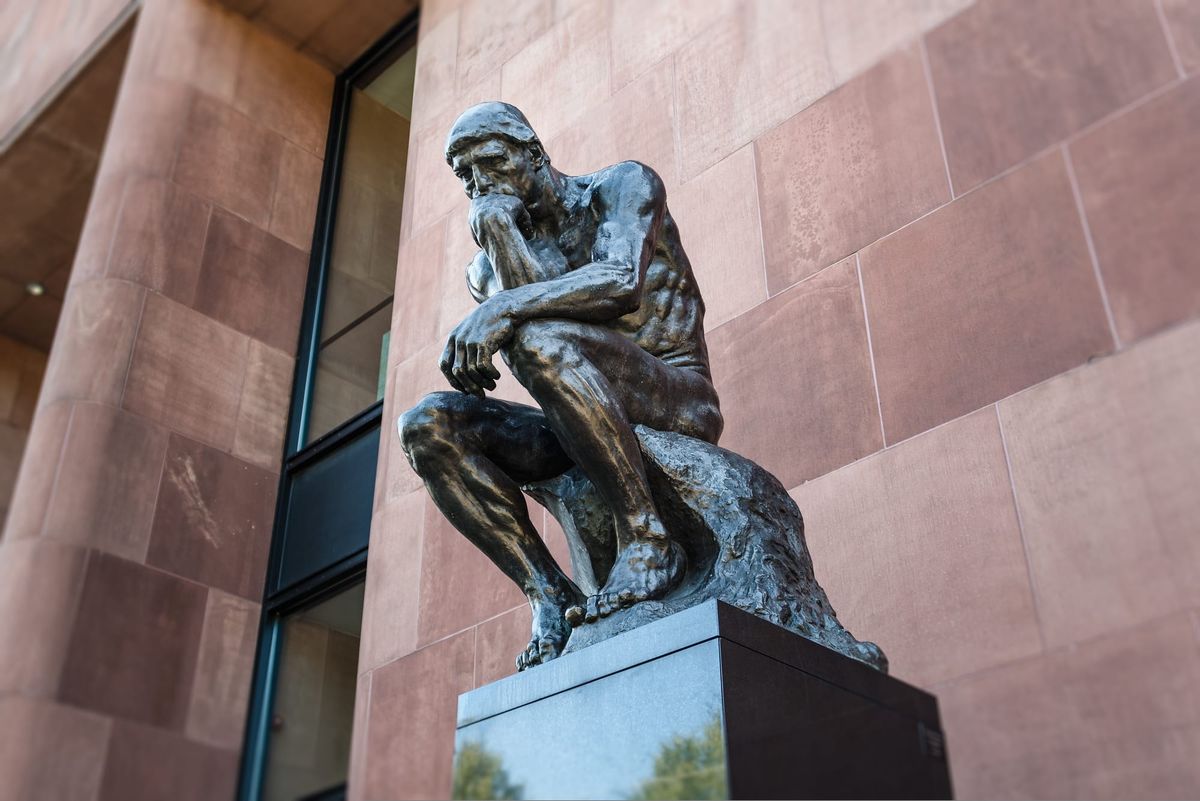
From its very cradle, modern philosophy has staked everything on the belief that Reason is the ultimate guarantor of a world we can understand. Reason was not merely treated as a tool for our thinking; it was crowned as the supreme architect of reality itself. From Descartes’ quiet certainty of the self, to Spinoza’s rigid geometry of the soul, through Kant’s grand mental architecture, and finally to Hegel’s "Absolute Spirit"—for three hundred years, Reason has been extending its borders. It seemed, for a time, that we were fast approaching a formula that could "explain everything."
Yet, a curious and darker movement was afoot. The history of thought reveals a strange paradox: the more Reason triumphed in the laboratory, the more it failed in the heart. As Science became the high priest of the modern world, Man did not find himself more at home in the universe; instead, he felt more like a displaced person—shivering in a void, alienated and lost. Philosophy has thus run into a general dead-end: we can grasp more and more of the "How," but we have less and less of the "Why."
This chapter aims to unmask the structural roots of this crisis and to show how this spiritual famine was slowly prepared in the halls of philosophy.
I. From Explaining the World to Enslaving It The starting point of the modern mind was a clear, though perhaps arrogant, assumption: that the grain of the universe runs parallel to the grain of our logic. Descartes found his rock in the "I think"; Spinoza locked the world into a chain of mathematical necessity; Leibniz sought the alphabet of existence in the principles of logic; Kant drew the boundaries of experience within the mind’s own shape; Hegel went further still, declaring that Reason is the very movement of Reality.
In this march, Reason underwent a subtle and sinister transformation. It ceased to be a way of describing the world and became the principle for constructing it. The world was no longer seen as a creation standing on its own feet, but as the mere unfolding of a human Concept. This provided the metaphysical backbone for the Scientific Revolution. Thus, until the end of the nineteenth century, an unspoken dogma remained: The expansion of Reason would naturally lead to the expansion of Meaning. But the hard reality of our modern civilization has proven that dogma false.
II. The Triumph of the Machine and the Death of Meaning If we judge by results, Reason has won an undisputed victory in the realm of the "Technical":
- Science has tamed the laws of Nature;
- Industry has rebuilt the very bones of society;
- Economics has catalogued our appetites;
- Logic has provided a universal tongue;
- The machine and the "Artificial Mind" have captured and copied the very forms of thought.
Never has Man been so successful in gripping and steering his world. And yet, never has he felt so hollow. This is the ghost that haunts modern philosophy: the stronger the Reason, the more fragile the Man. Heidegger spoke of this as the world being turned into a mere "Standing Reserve"—a warehouse of resources—and Man himself becoming nothing but the Chief Manager of the warehouse. The result is as clear as it is tragic:
- We have gained the whole world in power,
- But we have lost the soil in which we can take root.
Here, for the first time, Philosophy meets a challenge it cannot ignore: the very success of our machines has exposed the truth that Reason cannot give us a reason to live.