About this site
A New Operating System
for Human Civilization
Redefining humanity's civilizational OS — and practicing it through the New Civilization College and non-possessive enterprises.
The ProblemTechnology is accelerating.
Civilization is not keeping up.
AI and exponential technology are developing faster than humanity's ability to live well with them. The gap between what we can build and how we know how to live is widening at a dangerous rate.
Two futures are now in view:
New Civilization OS is the attempt to engineer that second path — starting from meaning and faith, not from politics or technology alone.
The ArchitectureThree Layers. From Ideas to Civilization.
Most systems stop at ideas. New Civilization OS is designed as a complete stack — from intellectual foundation all the way to real enterprises serving real people.
A complete, faith-based intellectual system covering six dimensions of human life — theology, philosophy, economics, personal success, non-possessive enterprise, and family education. Not six separate disciplines, but six facets of a single underlying framework.
A small, intensive college that trains a new generation of builders — people who have internalized the thought system and are equipped to operate non-possessive enterprises in the real world. Ideas without people to carry them remain ideas.
Graduates found faith-based, non-possessive enterprises — businesses that serve the public across every domain of economic and social life. This is where the new civilization becomes tangible: not in books or classrooms, but in how people actually work, trade, and live together.
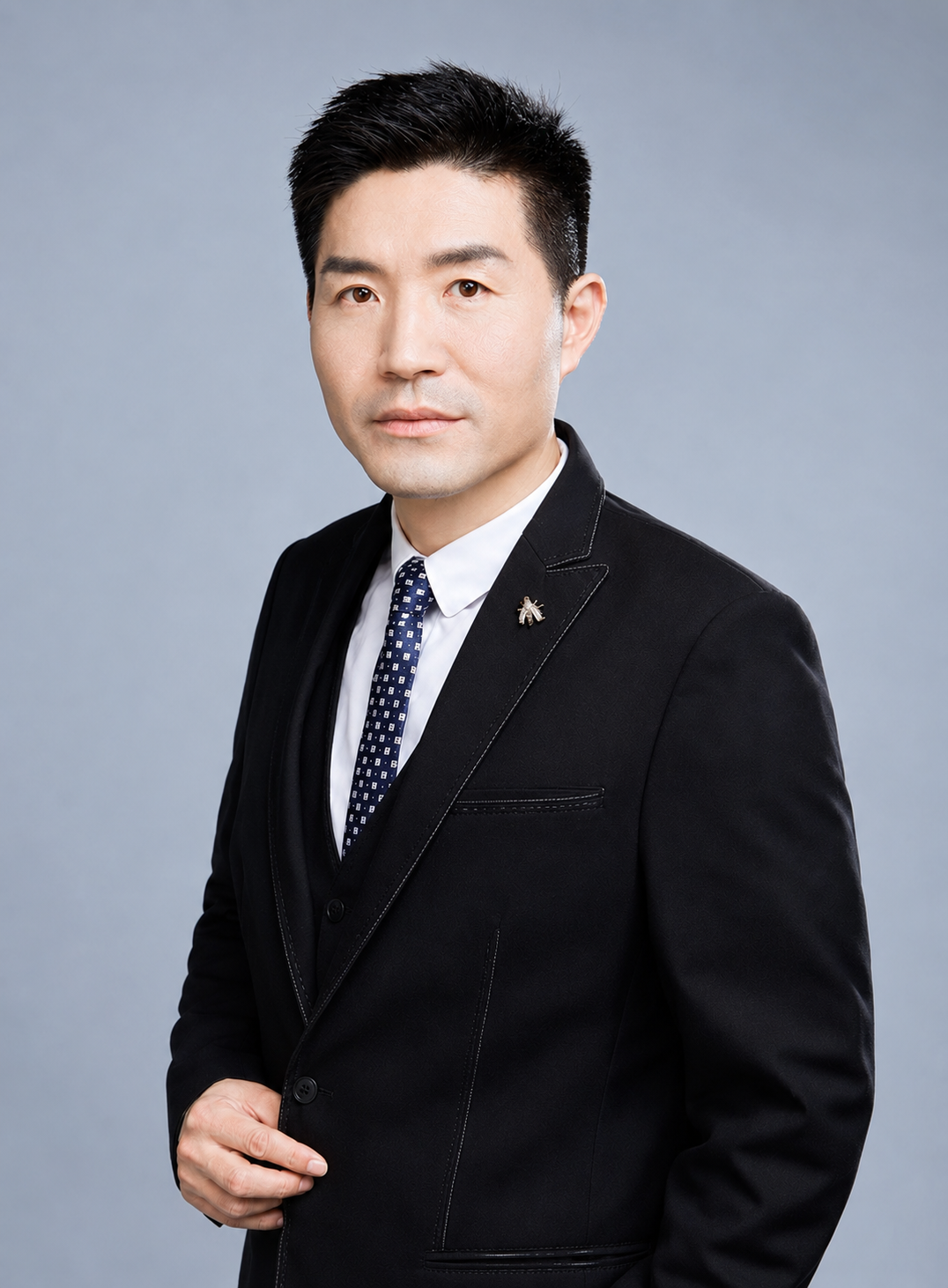
Zhiqi Liu
(Jacky)
Entrepreneur · Author · Fellow of the Royal Society of Arts
Civilization Systems Designer — building a new operating system for how humans work, learn, love, and create.
in 8 months
on SSRN
across China & US
From Entrepreneur to Civilization Architect
Zhiqi Liu spent 26 years at the forefront of Chinese and global business — founding multiple companies that reached the top three in their industries in China, and building ventures with international recognition. He served as President of one of China's most prominent strategy consulting firms, and as a Partner at a leading Chinese venture capital firm, with experience spanning more than twenty industries across China and the United States.
Alongside that career, he pursued a parallel intellectual journey — systematically studying Confucianism, Taoism, Wang Yangming's philosophy of moral knowledge (心学), Buddhism, and Western philosophy. He was not collecting traditions. He was searching for a unified framework that could hold them all.
In February 2025, he was baptized as a Christian in the United States. It was not the end of that search — it was the moment everything he had built and studied finally converged.
Four months later, on June 22, 2025, he received what he describes as a revelatory dream that crystallized his life's mission: to design a new civilizational operating system rooted in faith and non-possession. Not as a moral critique of capitalism, but as a fully engineered alternative — with its own philosophy, theology, economics, institutional structure, and way of living.
What followed was one of the most compressed intellectual outputs in recent memory.
8 Months. One System.
One Framework — Six Domains of Human Life
At its core: a civilization built on faith and non-possession — replacing the logic of acquisition with the logic of connection. Not a utopian ideal, but an engineered system with working institutional, economic, and personal layers.
What Leading Theologians Are Saying
I think we are engaged in a common project. I am extremely grateful to find people like yourself who are far better placed to carry out this task. I hope that a new movement can come into being around your ideas.
Philip Goodchild Professor of Religion and Social Theory, University of Nottingham · Author of the Credit and Faith trilogyI'm very glad that you are working on this issue of non-possession. It has many resonances in Catholic social thought — especially in Aquinas's distinction between possession and use. Let's hope that a new movement might recognize these ideas.
William T. Cavanaugh Professor of Catholic Studies, DePaul University · Director, Center for World Catholicism and Intercultural TheologyCo-editor, Modern Theology · PhD student of Stanley Hauerwas (Duke University)
One of the most influential Catholic political theologians in the United States; works translated into nearly 20 languages across six continents
The New Civilization College
The immediate institutional goal is a New Civilization College — a small, intensive program to train a new generation of builders who can operate non-possessive enterprises. The sequence: demonstration firm first, then college, then a network of graduate-built firms.
If you are a theologian, investor, entrepreneur, or Fellow who senses that the current system is running on an outdated protocol — the books are the starting point.