09|Why Hegel Remained Entrapped in the Cycle of Ideas
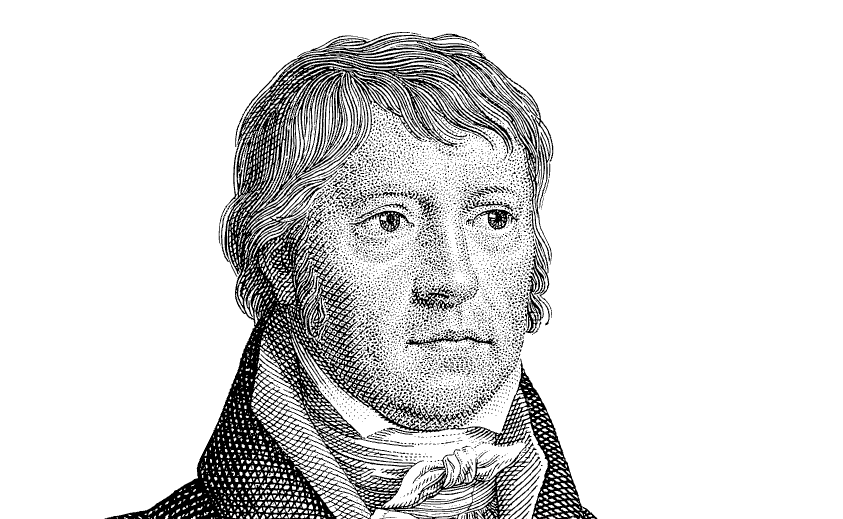
Chapter VII. The Dialectical Illusion: Why Hegel Remained Entrapped in the Cycle of Ideas
7.1 From Kant to Hegel: The Transgression of Reason Renewed In the wake of Kant, Philosophy found itself haunted by an unfulfilled longing. Kant had achieved a sober victory by demonstrating that Man does not confront the Ding-an-sich (Thing-in-Itself) in its naked state; rather, we experience the world only through the pre-ordained scaffolding of our own minds. Space, Time, and the Categories are the very terms upon which experience is granted an audience.
Yet, Kant was also a sentry; he marked the frontier beyond which Reason must not tread. He warned that when Reason attempts to dictate the ultimate structure of the world beyond experience, it falls inevitably into the snare of antinomies. It is here that Georg Wilhelm Friedrich Hegel performed his radical reversal.
Hegel was not content with a Reason in fetters. To him, Reason was not a faculty to be restrained, but the very unfolding of Truth itself. If the Kantian query was "What can Reason know?", the Hegelian query was more audacious: Is Reason itself the very Righteousness (the Logos) of the world? Under this conviction, Reason ceased to be a mere tool for reaching Truth and was enthroned as the very kinetic form of Truth. The "Idea" was no longer a hypothesis to be tested, but the Absolute starting point. Here, Hegel completed the lineage of Plato: the Idea is not a description of the world; it is the reason why there is a world at all.
7.2 The Hegelian Achievement: The Completion of Conceptual Self-Unfolding In the grand chronicle of thought, Hegel accomplished a feat hitherto unattempted. He did not place the Idea in a transcendent "Yonder," as Plato had, nor did he lock it within the sensory boundaries of the mind, as Kant had. Instead, Hegel sought to show that the Idea requires no external crutch; it can, and must, determine its own nature through its own conceptual movement.
In his Science of Logic, Hegel embarked upon a titanic project. He set out not from experience, nor intuition, nor psychological fact, but from "Pure Being." From this seed, he allowed the Concept to unfold through internal contradiction, negation, and self-sublimation (Aufhebung), until it formed a self-sufficient Whole. The majesty of this attempt lies in its mechanism. The Dialectic here is no mere trick of three-step rhetoric; it is a profound summation of the world as we perceive it:
- Things are not frozen statues, but developments born of tension.
- Contradiction is not a logical blunder, but the very engine of generation.
- Negation is not annihilation, but preservation at a more exalted level.
In the realm of the "Understandable World," the Dialectic is triumphantly successful. It provides a map for the movements of nature, history, and society. Indeed, for any world that can be grasped by the intellect, the Dialectic remains the most formidable of structures. Hegel stands as the High Priest of the Classical Rationalist tradition—the moment when Reason attempted, for the first time, to stand solely upon its own feet.
7.3 Does Conceptual Deduction Equal Truth Itself? Yet, at the very summit of this completion, a shadow appears. The Hegelian system is awe-inspiring precisely because it presents an inescapable necessity: the Concept seems bound to unfold in this manner and no other. But this raises a distinction of capital importance: Is this the necessity of Existence, or merely the necessity of the Concept?
When an Idea achieves perfect internal coherence through its own logical march, do we truly have warrant to declare that the world has marched alongside it? In Hegel, the two are struck into one: the self-movement of the Idea is the self-movement of Being. But has this identity been proven, or has it merely been smuggled in as a silent premise? The premise is this: That whatever achieves the highest degree of self-consistency within the mind automatically gains the status of ultimate Reality. We do not question the rigor of Hegel’s logic; we question the strata to which that rigor belongs.
7.4 The Status of the Dialectic: Law of Being or Mechanism of Description? We must pose a radical question regarding the status of the Dialectic. There are two paths of interpretation:
- The first holds that the Dialectic unveils the inner laws of Existence. The world moves as it does because Being itself obeys the law of "negation of negation."
- The second holds that the Dialectic is a stabilizing mechanism which the human mind inevitably adopts when it attempts to organize and describe the Truth.
Hegel merged these two into a single flame. But was this merger logically necessary? In truth, the success of the Dialectic can be entirely explained by the second path.
- It embraces contradiction—to prevent the conceptual system from shattering under tension.
- It emphasizes "becoming" over "stasis"—because a static concept cannot carry the weight of fluid experience.
- It presents an "inevitable unfolding"—because once a conceptual starting point is accepted, the path of deduction loses its freedom. From this vantage, the necessity of the Dialectic is not born of the stars, but of the internal requirements of a stable descriptive system.
7.5 The Movement of Logic vs. The Movement of Truth Thus, a divorce becomes unavoidable: The movement of Logic is not the movement of Truth. Logical movement is the unfolding of concepts under established rules; it ensures that the system does not collapse into chaos. Whether Truth itself is identical to this unfolding remains a question that has not yet been answered. Hegel’s system is the masterpiece of human Reason within its own cage, but it does not exclude the possibility that this "completion" occurs only within the structures we are capable of understanding.
7.6 Summary: The Completion of Hegel and the End of Classical Reason Hegel did not fail through lack of rigor or incompleteness. On the contrary, he failed because he was too successful. He achieved the total self-sufficiency of the Idea; he captured the laws by which Reason operates; he perfected the highest form of classical metaphysics.
But in that very completion, the boundary was revealed. When Reason stands entirely upon itself, has it finally gripped Being, or has it merely reached the final frontier of its own architecture? Hegel answered with the former. Whether that answer can still be believed is the haunting question he left behind. In this sense, Hegel is both the Everest of Classical Reason and its final, crumbling precipice.