13|How Wittgenstein Re-chartered the Philosophical Course
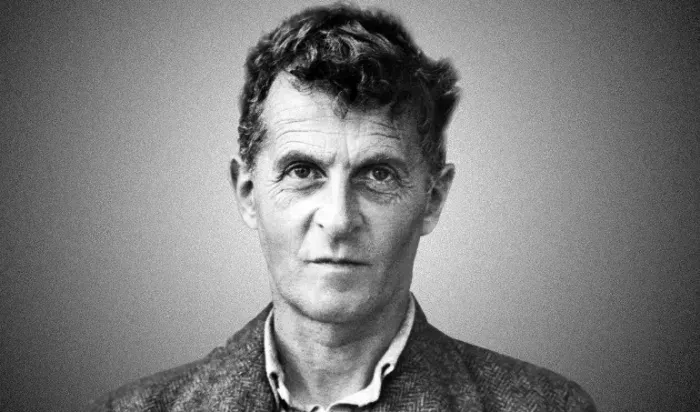
Chapter VIII. The Linguistic Turn: How Wittgenstein Re-chartered the Philosophical Course
8.1 Beyond Hegel: Has Reason Reached Its Tether's End? Following the completion of Hegel’s Science of Logic, Philosophy entered a state of peculiar suspension. This was not because our perennial riddles had been solved, but precisely the opposite—a certain grand possibility had been utterly exhausted. Since the dawn of Plato, Philosophy had clung to a singular faith: that through the faculty of Reason, we might steadily approach the authentic architecture of the world. This creed was institutionalized by Aristotle, sanctified by the Scholastics, critically circumscribed by Kant, and finally, brought to its absolute consummation in Hegel.
Hegel required no external footings. The Idea, through its own internal logical kineticism, erected a system that was total, self-sufficient, and inescapable. Yet, within this very fulfillment, a haunting question arose: if Reason has completed all its deductions within its own chambers, are we truly unveiling the face of Existence, or merely displaying the skeletal structure of Reason itself? Hegel did not linger upon this doubt. But the history of thought could no longer bypass it. It was at this very fracture that Wittgenstein appeared.
8.2 The Discovery of Language: From Reason to the Framework of Expression Wittgenstein’s pivotal breakthrough did not lie in the proposal of a new metaphysical theory, but in a radical shift in the direction of his inquiry. The question was no longer:
- Is Reason correct?
- Are Concepts necessary?
- Is Logic true?
Rather, the inquiry was re-formulated as: Through what medium do we think, judge, and apprehend the world? Wittgenstein’s answer was disarmingly simple: Language. This was no trivial observation. It signaled a fundamental re-orientation of the mind:
- Reason was no longer viewed as a transcendental faculty independent of expression.
- The laws of Reason were re-classified as the operational rules of Speech.
- Concepts, logic, and judgments were relocated within the lattice of Language, rather than the lattice of Being.
From this moment, Philosophy ceased to merely debate how the world is, and began to reflect upon how the world is presented, organized, and understood within the vessel of Language. This path allowed Philosophy to march forward from the Hegelian impasse.
8.3 The Early Wittgenstein: Language as the Picture of the World In the Tractatus Logico-Philosophicus, Wittgenstein advanced a proposition of immense power: Language is a picture of reality. By "picture," he meant not a visual copy, but a structural correspondence. A proposition possesses sense not merely because it points to an object, but because its logical form corresponds to a possible state of affairs in the world. In this light:
- The world is the totality of facts.
- Facts possess a logical structure.
- Language, by sharing this structure, is able to depict the world.
This theory performed a crucial substitution: what Plato called the "shadows of the Forms" was now understood as the mapping of the world’s structure by Language. Crucially, Wittgenstein did not claim that Language was identical to Truth. He admitted that Speech does not exhaust the world. Yet, he issued a formidable judgment: For us, that which can be depicted by Language constitutes the entire perimeter of our cognizable world. Language may be an imperfect picture, but it is the only one we are permitted to use.
8.4 The Later Wittgenstein: Language as a Form of Life However, Wittgenstein himself did not remain at this station. As he reflected more deeply on the actual usage of words, he realized that Language does not always obey a single, crystalline logical structure. In the Philosophical Investigations, Language was re-imagined as:
- A practice embedded within the textures of life.
- Inseparable from action, custom, and training.
- Carrying diverse functions across myriad contexts.
Language was no longer a singular "Picture of the World," but a series of Language Games which together comprise our "Form of Life." This shift was of paramount importance. It meant that:
- Meaning resides not in abstract structure, but in usage.
- Reason is not a formal system, but a practical competence.
- Language does not merely depict the world; it participates in the living of it. The world was no longer "presented" as a logical whole; it was "enacted" through living.
8.5 The Limit of Wittgenstein: Language as the Sole Portal? Yet, within this titanic breakthrough, Wittgenstein also marked a resolute boundary. Whether in his earlier or later periods, he maintained a foundational stance: that which lies beyond Language is, for us, devoid of sense. In his youth, he said: "Whereof one cannot speak, thereof one must be silent." In his maturity, he said: "Philosophical problems arise when language goes on holiday." Behind both lies the same premise: Man’s relationship with the world can only be forged through Language.
8.6 An Unfinished Distinction: Mirror or Translator? Wittgenstein successfully dismantled the old idol: "Reason is Being." But he appears to have retained a new assumption: "Language is the World." Even while admitting that Language is not Truth, he treated it as the only mirror in which we might face reality.
However, another possibility exists: Language is not a mirror, but a translator. A translator does not manufacture reality, nor is it identical to the original text; rather, under a specific structure, it renders certain dimensions into an intelligible form. If Language is a translator, then it follows that:
- It is not the sole mediator.
- It possesses a variable and perhaps arbitrary structure.
- It may obscure certain dimensions while accentuating others.
In this understanding, the limitation of Language does not signal the "End of the World," but merely the boundary of a particular mode of translation. This is the direction in which Wittgenstein did not proceed.
8.7 Summary: The Consummation of the Linguistic Turn and Its Unmet Horizon Wittgenstein performed a work of historical necessity. He terminated the tradition of "Reason-as-Truth" and re-directed Philosophy toward the mediating structure of Language. After him, no philosopher can afford to ignore the conditions of expression or the context of usage. But in doing so, he left a new question suspended in the air: If Language is but one way in which Man apprehends reality, do there exist other mediating structures that remain un-reflected? It is within this very suspension that Philosophy truly enters the domain of the "After-Language."