15|Locke and Hume: The Captivity of Experience within Speech
8.8.2 Locke and Hume: The Captivity of Experience within Speech
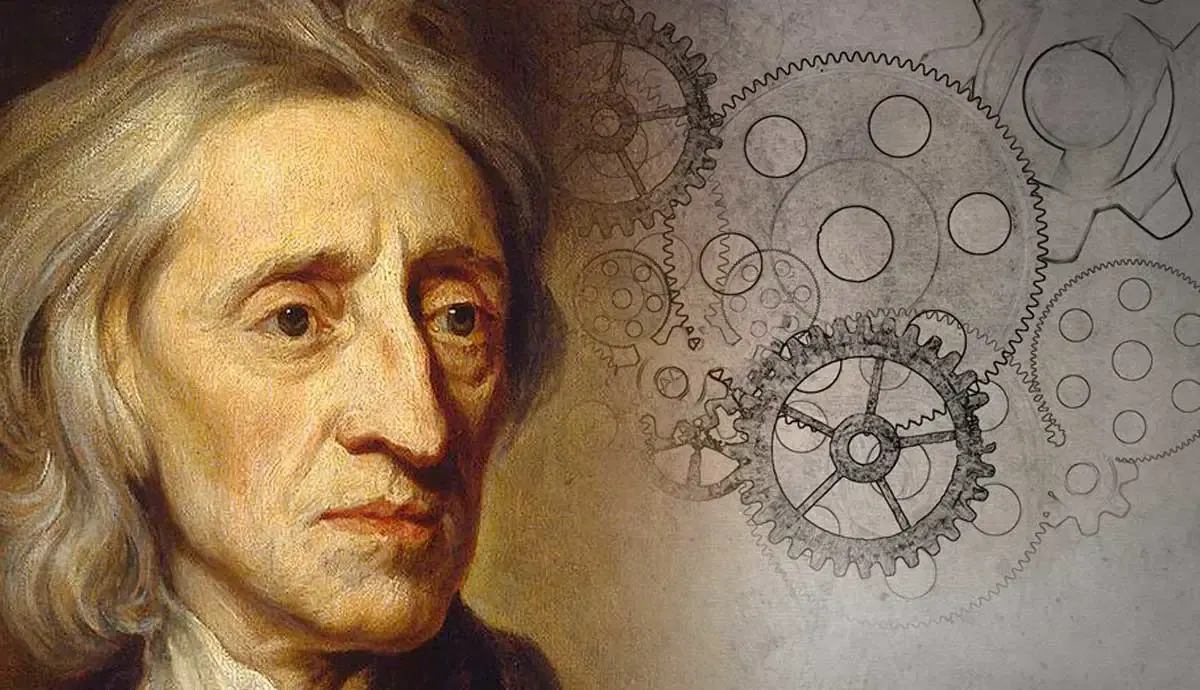
John Locke’s foundational judgment was as resolute as it was clear: the mind brings no innate furniture with it into the world. All ideas, he contended, are the offspring of Experience. By "Experience," Locke did not mean a reality already carved out by concepts or logic, but rather the raw accumulation of sensation and reflection. The world first assaults the mind as a flurry of feelings; Language and Concepts are merely the tools we use to sort, compress, and label this sensory harvest.
In this light, Language was stripped of its status as the rational architecture of Truth. It was demoted to a mere system of tags for processed experience. Locke harbored no illusions that words could unveil the inner essence of Being. On the contrary, he insisted that the perennial squabbles of philosophers arose primarily from the fog and misuse of words. Words do not possess a natural marriage to things; they are but conventional signs adopted for the convenience of social commerce. When men mistake the sign for the reality, Philosophy drifts away from Experience and becomes entangled in its own conceptual thickets. Thus, in Locke, Language was explicitly devalued: it became the auxiliary of experience, rather than the inner form of Truth.
This trajectory was driven to its ultimate edge by David Hume. Hume pushed Empiricism to a point of near-total dissolution. Causality was no longer seen as the iron logic of the cosmos, but merely as a "mental habit" born of repetition. The "Self" was no longer a stable substance, but a mere "bundle of perceptions." Necessity, Substance, and Purpose—all were reduced to mere modes of association within our experience. In this crucible, Language lost the last vestiges of its metaphysical authority. It was no longer the instrument that unmasked the world’s structure, but merely the ledger in which we record the flux of our sensations.
On the surface, this posture seemed to signal the final collapse of the sovereignty of the Word. Yet, a crucial observation must be made: though Locke and Hume withered the metaphysical prestige of Language, they never truly interrogated its terminal position in the act of knowing.
They rebelled against the notion of Language as Being, yet they tacitly accepted a new dogma: that all meaningful experience must pass through the sieve of Language to be organized at all. At this juncture, though Language was no longer the source of Truth, it remained the unbreached perimeter of Experience.
The Empiricists never paused to ask: Is there a stratum of Encounter that remains true, yet refuses to enter the gates of Speech? For Locke and Hume, the "Real" remained wedded to the "Expressible." Language was treated as a tool for experience, yet experience itself was understood as something that must be "carryable" by Language.
It is this unasked question that allowed Empiricism to reinforce the clandestine sovereignty of Language even as it dismantled the old metaphysics. They successfully corrected the equation "Language = Being"—an act of necessary hygiene—but they did so by retreating to Experience, only to find that Experience itself was held captive within the linguistic frame. They maintained the unreflected premise: that Language remains the final causeway through which Experience is established. In this scheme, Language was demoted in rank, yet it was never truly transcended.