18|Heidegger: The Threshold of Breakthrough
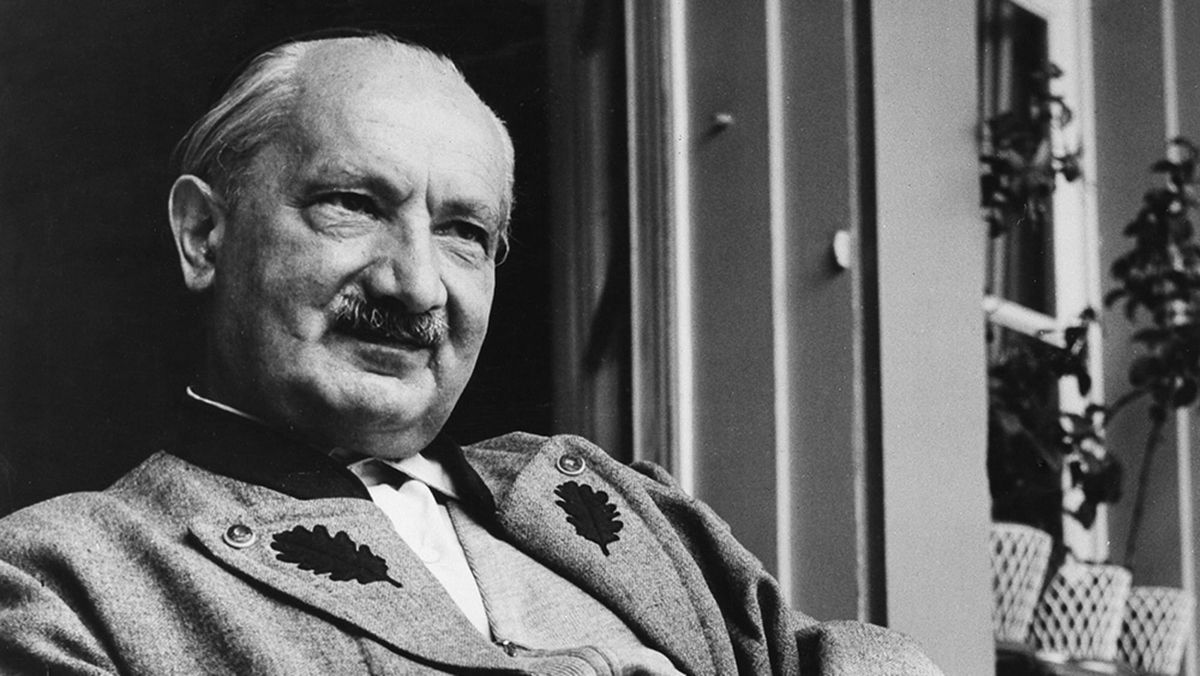
Chapter IX. Heidegger: The Threshold of Breakthrough
The Nearness to the "Beyond" and the Hesitation at the Gate
As Language gradually usurped the throne of the Idea, becoming the new sovereign of Philosophy, a haunting question began to loom: Is Language truly the sole portal to Being? Does there exist a mode of existence that remains authentic without passing through the filter of Speech? If the reign of the Idea once gave birth to the hegemony of Metaphysics, is the centralisation of Language merely the same tyranny under a different name? It was against this horizon that Martin Heidegger took his monumental step.
1. From Epistemology to Ontology: The Great Inversion The philosophical tradition preceding him—whether it be the Idealism of the Greeks, the Empiricism of the British, or the Analysis of the Moderns—rested upon a shared dogma: that Man, as a Subject, employs a cognitive structure (Idea, Experience, or Language) to grasp a world treated as an Object. Heidegger was the first to resolutely cast aside this premise. He ceased to ask, "How does Man know the world?" and turned instead to the primordial query: "What is the meaning of Being itself?" This was no mere supplement to theory; it was a displacement of the entire philosophical firmament.
2. "Dasein": The Fraying of Linguistic Hegemony To sustain this shift, Heidegger introduced the pivotal concept of Dasein. Dasein is not a new label for the Subject, nor is it "Man" in the sense of psychology. It refers to the "Being-there"—the mode of an entity that is always, already, thrown into a world. In the gaze of Dasein, Man is no longer a spectator standing over against the world; he is the very "Being-in-the-world" itself. The consequence is profound: Being does not wait for Language to give it a name; Being has already unfolded. Language is no longer the prerequisite for Being, but merely one mode of its manifestation.
3. Language as the "Dwelling," Not the Judge Heidegger famously declared, "Language is the house of Being." This is oft-mistaken for a form of linguistic centrism, but in his mouth, the meaning was quite the opposite. To say Language is the "house" is to say it is the place where Being is temporarily sheltered and voiced—it is not Being itself. Being is not manufactured by Speech; it is merely responded to and presented within it. Language is thus divested of its role as the Arbiter of Truth and relocated as a specific mode of Dasein’s existence.
4. Before and Beyond Speech: The Primordial Unfolding At this juncture, Heidegger decisively exited the logic of linguistic hegemony. He insisted that:
- Being does not first appear as a Concept.
- The world is not first encountered as a Description.
- Meaning does not originate in the act of Naming.
On the contrary, Being is first experienced, endured, and inhabited. Heidegger identified "State-of-mind" (Befindlichkeit) or Mood as the primal way the world opens to us. Practice and "Dwelling" precede Statement. Even Silence is recognized as a potent mode of existence. Here, that which remains unuttered is not "non-existent"; it is, in fact, more primordial.
5. The Grand Achievement: Existence Precedes Language Heidegger achieved a three-fold correction of the tradition:
- The Paradigm Shift: Returning Philosophy from the "Subject-Object" split to the ground of Being.
- The Inversion of Order: Existence precedes Language; Practice precedes Description; Encounter precedes Expression.
- The Validation of Silence: The "Unsayable" is rescued from the void; Silence is granted ontological standing.
The equation of "Reason = Language = Mirror of Fact" was, for the first time, systematically dismantled.
6. The Heideggerian Halt: Approaching the Beyond, yet Recoiling Yet, it is precisely here that Heidegger faltered. He clearly identified that Being precedes Language and that Mood and Silence are the primary clearings of existence. But he refused to press into the more perilous territory: What is the inherent structure of these non-linguistic modes? If Being must be "felt" before it is "spoken," then:
- What is the structural logic of a Mood?
- How does Silence carry its weight of meaning?
- Can the stratum of Being that Language fails to cover be systematically apprehended?
At this frontier, Heidegger chose to stay his hand. He refused to re-conceptualize these primal encounters, fearing perhaps that to do so would merely drag them back into the "Language-prison" he had just escaped.
7. Correcting the Gaze, yet Withholding the Path Heidegger corrected our posture, but he did not provide the map for the journey ahead. He rescued Man from a world inverted by Reason and Language and placed him back at the starting point of Being. But he left us standing at the threshold, mute. He opened the door, but he did not enter.
8. Summary: Escaping Hegemony, yet Dreading the Crossing The majesty of Heidegger lies in his dismantling of Language as the sole legal tender of Truth. His limitation is equally stark: he refused to build a structure for that which lies beyond. It is within this very fracture that a new question is exposed: If Being is not identical to Language, how shall Man continue to think once the Word has reached its limit? This is no longer a question for the old philosophy; it is the genesis of the new.