22|The Universal Impasse: Perceiving the Tyranny, yet Halting within the Walls
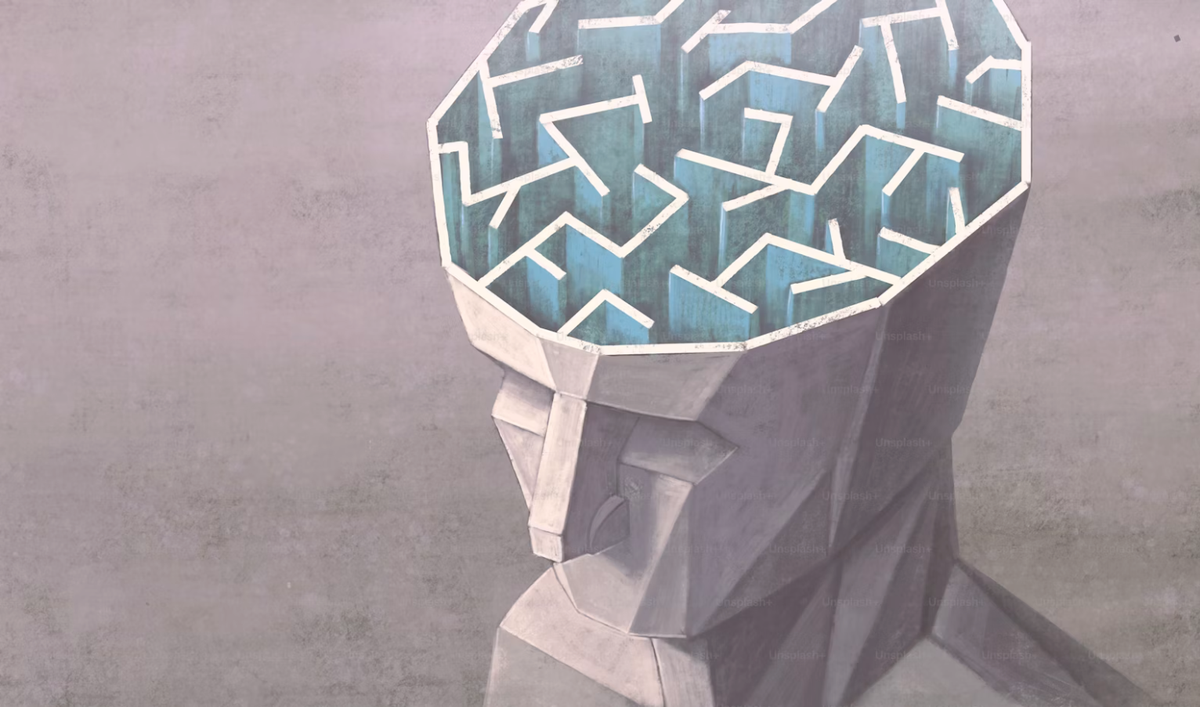
9.4 The Universal Impasse: Perceiving the Tyranny, yet Halting within the Walls
In reviewing Foucault, Derrida, and the Postmodernists, a distinct and consistent intellectual arc comes into view. They succeeded in unmasking a formidable truth: that Language is no neutral instrument of cognition, but is deeply complicit in the shaping of Knowledge, the Subject, and Reality itself. Discourse manufactures knowledge; Difference and Deferral dissolve the center; Grand Narratives are shattered into fragments. Language is no longer seen as the transparent medium of Truth; it is identified as a Power Structure, a historical apparatus, and an inescapable mediator. Yet, amidst this crystalline deconstruction, a more profound question was never truly uttered.
I. The Deconstruction is Complete, yet the Inquiry Stagnates These thinkers collectively achieved one goal: they revoked the legitimacy of Language as the "Mirror of Truth." They demonstrated that:
- Language is not synonymous with Meaning.
- Concepts do not lead to Essence.
- Structures do not guarantee Truth.
- Knowledge is not a natural harvest. But they almost unanimously halted at the level of negation. Language was exposed as a tyranny, yet it was still tacitly accepted as the only cognitive foundation upon which Man could stand.
II. An Unbroken, Clandestine Consensus Beneath their surface disputes, these philosophies share a premise that is rarely interrogated: that Human Cognition must, by metaphysical necessity, take the form of Language-Concept-Discourse. Consequently:
- Foucault discusses "how to live differently within discourse," yet never discusses experience outside of it.
- Derrida deconstructs the presence of meaning, yet never touches upon non-linguistic modes of understanding.
- Postmodernism rejects Ontology, while simultaneously refusing any attempt to reconstruct Epistemology. Language was denounced as power, as illusion, and as fiction—but its status as the Sole Portal was never truly challenged.
III. The True Query: Not the "Existence of Meaning," but the "Exclusivity of Speech" What remains unresolved is not whether Ontology, Meaning, or Universal Structure exists. Rather, it is two more fundamental questions:
- Even if Meaning and Being cannot be fully grasped by Language, can they still be known?
- Must such knowledge necessarily assume the form of Language and Concept? In the works of these thinkers, these two questions were almost never explicitly posed. The result is a paradox: the hegemony of Language is dismantled as a problem, yet it is preserved by default, simply because no alternative is offered.
IV. The Unfinished Road: The Void After Language The shared failure of this intellectual sequence lies not in a lack of radicalism, but in a radicalism that limits itself to demolition while refusing to bear the consequences. They perceived the tyranny of Language, yet they were unable to propose:
- A structure of experience beyond Language.
- A mode of understanding that is non-conceptual.
- A form of Presence that precedes Discourse.
- An Epistemology that does not require Expression as its prerequisite. Language ceased to be Truth, yet it remained the uncrossed Perimeter.
V. Conclusion Foucault, Derrida, and Postmodernism collectively brought about the collapse of Logocentrism, yet they all halted at the same threshold. They negated the absolute authority of Language, yet failed to provide an Epistemology outside of it. They deconstructed "Language as Truth" but retained "Language as the Only Way."
The question that truly remains to be unfolded is this: If Language is not the sole mode of cognition, how then shall Man encounter Being—before Language, outside of it, or above it?