24|The First Dimension: Absolute Truth (God)
Chapter X | The First Dimension: Absolute Truth (God)
By "God," we do not mean the anthropomorphic figure often misunderstood in religious tradition. Even within Christendom, God was never strictly defined as a "humanoid being." Personification is merely a narrative convenience, a linguistic bridge to facilitate relationship, rather than a description of His essence. In this context, God is defined as Absolute Truth: a Truth that does not depend on human cognition, nor even upon the existence of the physical universe. He is the A Priori Source of all that is—the Being before Being.
This concept is no monopoly of religion. Since the dawn of Philosophy, long before the advent of Christianity, Man has sought to identify this dimension of Reality. In Plato, this was called the "Idea." We must clarify: Plato’s "Idea" was not a "rational concept" in the modern sense, nor an abstract model derived from experience. On the contrary, for Plato, the empirical world is a veiled world—the shadows upon the cave wall.
- All that we perceive are mere projections;
- Our ability to judge these projections is our Faculty of Cognition;
- Our method of interpreting and organizing these meanings is Reason. The fundamental limitation of human cognition arises from these very conditions: we are bound within the cave, grasping at Reality only through its shadows. Thus, Plato’s "Idea" points not to a product of human thought, but to the Actual Truth of the world’s operation—the essential structure of Being itself.
Yet Plato halted there. He revealed the essentiality of Being but did not ask the more primordial question: From whence does the "Idea" itself arise? How did Being come to be in the first place? This was no defect in Plato, but the very boundary of Philosophy. Philosophy, by definition, discusses a world where "Being is already there." The question of "Why there is Being at all" has never belonged, in a strict sense, to Philosophy. This is where Religion enters.
In our scientific age, this question has not vanished; it is merely obscured. Science can trace the mathematical origin of the cosmos, but it cannot answer: If the universe has a mathematical starting point, what preceded it? If Existence has an origin, how was that origin itself established? This is not a failure of scientific progress, but a boundary of methodology. Logically, one must acknowledge a "Presence" responsible for the very state of "Existence being generated." This Presence is Elohim.
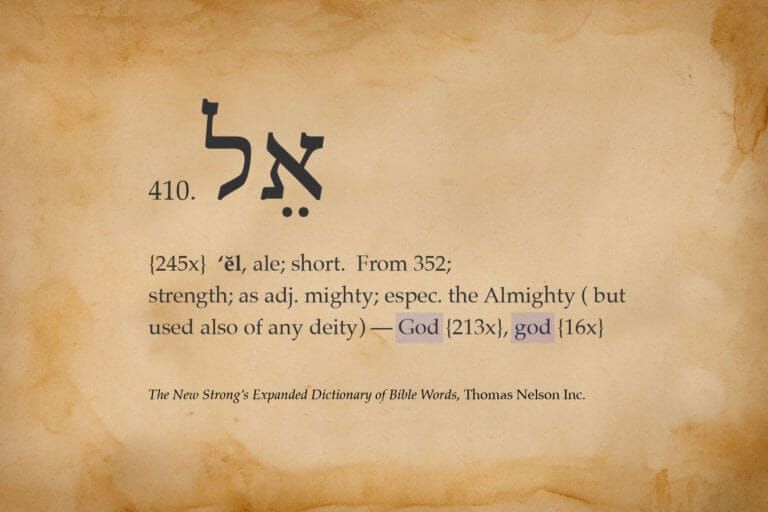
The Hebrew term Elohim does not signify an "anthropomorphic deity." If we strip away later religious glosses and return to the ancient context, Elohim points to the Field of Power that allows all things to occur, to be established, and to endure. He is not a "being among beings," but the Energy Field that allows Being to become Being.
This First Dimension of Absolute Truth possesses three defining characteristics:
1. Integral, Infinite, and Transcendent of Spacetime Absolute Truth is, first and foremost, Integral. This does not mean a "collection of all things," but rather that it is self-existent, independent of any external conditions. All things we experience are Incomplete; they depend on time, space, causality, and relations. But Absolute Truth does not dwell in this web of contingency. It does not require explanation, nor can it be reduced. All explanations begin from It; all reductions occur within It.
In this sense, Absolute Truth is Infinite. This is not a mathematical infinity or an endless duration in time. Such ideas are merely Reason trying to imagine the Infinite using finite tools. True Infinity means being Unconstrained by any Boundary. Time, Space, and Logic are not its limits; they are the structures that only become possible within It.
Spacetime cannot serve as a coordinate system for understanding the First Dimension. To speak of "Past, Present, or Future" or "Here and There" is to apply distinctions that only emerge after Being has already been established. Absolute Truth is invisible and ineffable, yet omnipresent. It is difficult to grasp not because it is remote, but because it is too fundamental—it is the bedrock upon which the very possibility of "discussion" rests.
2. Non-Linguistic, Non-Logical, and Indivisible Because Absolute Truth is the "Being before Being," and because human Reason—and its modes of thought—are contained within Being, there is an inherent epistemic gap. Just as a machine or an AI cannot fully comprehend the human mind that conceived it, so too are Language and Logic incapable of describing the Absolute.
Philosophy eventually abandoned this realm because it sought only "knowable truths" within human reach. Religion took up the task, but the moment Religion employs Language and Logic to explain the Absolute, it inevitably veils and misinterprets the very Truth it seeks to reveal. Absolute Truth can be affirmed by Faith in its existence, but it cannot be exhausted by the explanations of Cognition.
It is also Indivisible. Division is a mode of human thought—the analytical urge to fragment. But fragmentation is a lens of observation, not a state of the Absolute. Just as a painting cannot be understood by the mere summation of its divided parts, Absolute Truth is a total and indivisible unity. Facing It, we do not require the power of explanation, but the Humility of Reason.
3. The Ontological Source, Not the Phenomenon Absolute Truth does not belong to our empirical world. If we must use a metaphor, consider the Designer of an AI holographic game. We, as characters within the game, cannot use the internal mechanics of the simulation to explain the Designer. The "Phenomena" we experience are results already unfolded within a pre-set structure.
We cannot know the Source directly through the phenomena, but we can infer its nature through a kind of "Inverse Deduction." As one might infer the vastness of the ocean from a single drop, or a father's character from his son, we see the "Echoes" of the Absolute. Human Reason is not a self-sufficient system; it is a continuous response to how phenomena are manifested.
Summary Absolute Truth requires no proof, nor can it be denied—not because it is "beyond question," but because every act of questioning already presupposes its existence. When Man elevated Reason and Science as the sole foundations of the world, Absolute Truth did not vanish; Man simply chose to stop acknowledging It. This does not erase the Reality of this dimension; it only ensures that Man mistakes the Finite for the Infinite, and the Derivative for the Absolute. This is the genesis of all subsequent crises.