25|The Second Dimension: The World of the Ding-an-Sich
Chapter XI | The Second Dimension: The World of the Ding-an-Sich (The Projection of the Divine Will)
We have established that Absolute Truth is beyond the descriptive powers of human Reason; It is the "Being before Being," the primordial source of all manifestation. Manifestly, this is a realm inaccessible to human intellect and experience alike. We cannot directly cognize, nor even directly inhabit, that which precedes Existence. Here lies the primal schism between Religion and Philosophy: while Religion seeks to believe in the Source, Philosophy—from the standpoint of Epistemology—must begin its work within the world in which we are already situated. It is only by studying the laws and fabric of this manifest world that we may, in our profound finitude, infer the nature of Absolute Truth. For this Existence is the creation of that Truth; as such, it must bear the signature of the Absolute Consciousness.
The Second Dimension, therefore, is Existence as Created—the projection of the Will of Elohim. God engages with Man through this created order; His Will is embodied in the very grain of the universe. Though this is but a partial manifestation of His infinite Will, it is the only manifestation accessible to our senses and meaningful to our cognition. All true Philosophy commences here. Its purpose is not to deny the Absolute Will, but to investigate its Authorized Projection.
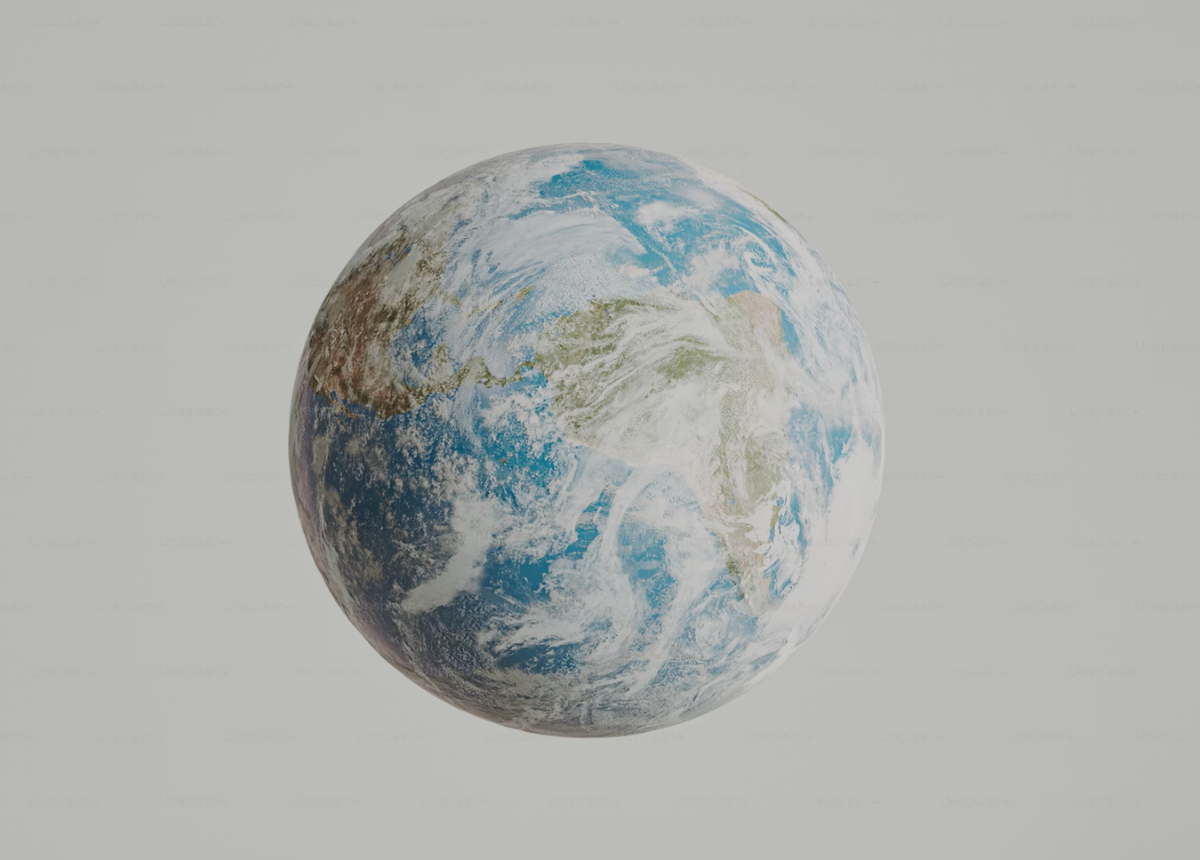
In Spinoza, this projection was identified as Nature—the singular, infinite Substance that is God. In Plato, it was called the "Idea"—not the Absolute Truth of the First Dimension, but the sovereign laws of the cognizable world. Hegel, too, in his Shorter Logic, sought to deduce the Absolute Idea through the unfolding of concepts, pointing toward this same objective reality. We must define this concept with clinical precision: The World of the Ding-an-Sich (the Thing-in-Itself) is the Existence created by the "Being before Being." It is the natural world, existing independently of our perception, yet housing and sustaining us. It is the sole object of all true Science and Philosophy: Being Itself.
Characteristics of the Object-in-Itself:
1. Neither Mere Phenomenon, Nor the Absolute A common confusion in Philosophy must be rectified: the World of the Ding-an-Sich is "Existence" or "the Universe itself." It is not to be confused with Phenomena. Phenomena are those fragments of reality mediated by human senses and reshaped by our cognitive faculties. Phenomena are finite, constrained by the limitations of our sensory apparatus and the inaccuracies of our thought. The Ding-an-Sich ≠ Phenomenon. The World-in-Itself is infinite—not only in its material exhaustibility but in its spatiotemporal reach. While a phenomenon is a shadow cast by human perception, the Ding-an-Sich is the Sole Substance. Mountains, stars, and men are not independent substances; they are modes of this singular, objective Reality.
However, we must also insist: The Ding-an-Sich is not Absolute Truth. This is where Classical Philosophy often faltered, conflating the "God of Nature" with the "God of the Source." The distinction is vital: the World-in-Itself is the unique reality accessible to our cognition, but for Absolute Truth, it is but one manifestation among possible others. We inhabit a physical universe, but the "Being before Being" transcends even this totality. By recognizing this, we grant Science and Philosophy their rightful center while stripping them of a false absolutism that leads to intellectual poverty.
2. The Absolute Object of Philosophical Inquiry If the Ding-an-Sich is neither a passing shadow nor the ultimate Source, what is it? It is Being-as-it-is. We are both the subjects who perceive it and the objects contained within it. For any discipline—be it Science or Philosophy—to claim the status of "Knowledge," it must possess a unified, stable, and objective target. It must presuppose that the world exists and that it is perceptible.
- Plato called it the "Idea," the reality behind the shadows.
- Kant called it the Ding-an-Sich, the thing independent of our senses.
- Spinoza called it "Nature," the infinite substance.
- Hegel called it "Absolute Spirit" as it knows itself through the world.
3. The World as a Lower-Dimensional Manifestation of Truth Why is the world intelligible? Why does it possess laws instead of chaos? If Man is merely a fragment of Existence, why can he grasp the laws of the Whole? The answer is that the World-in-Itself is the Idealized Manifestation of the Absolute Truth. Because it originates from a unified Will, its material crystallization is necessarily imbued with order and cognizability. Existence is not a random collision; it is an embodiment of the Absolute Reason. Consequently, it is structured, coherent, and knowable.
Summary The Second Dimension is the bedrock of our cognitive system. It is the "Being" we can touch. To engage in Science or Philosophy is to assume a stable, unified, and infinite Reality that Man can partially apprehend. Without this assumption, all thought collapses into a heap of fragmented "sensory impressions" without a foundation.
But this raises a haunting question: How can we, as finite entities within this Substance, grasp the laws of the Substance itself? What is this faculty we call "Reason"? What are its structures, its boundaries, and its origins? This is the gateway to our next dimension: Reason.