36|The Limits of Language: The Cats and the Automatic Water Dispenser
Chapter XVIII | The Limits of Language: Why Truth Can Never Be Fully Uttered
1. Introduction: What Problem Does This Chapter Resolve? In our previous inquiries, we delineated a significant historical trajectory in the development of human Reason. At the dawn of thought, Philosophy revolved around Truth; subsequently, Reason became the instrument to reach that Truth; later still, Language gradually usurped the station of Reason; and finally, Language became the sole legitimate form of cognition.
Once Language established itself as the exclusive structure of knowing, a profound impasse emerged: If Language itself possesses structural limitations, then do all our current rational cognitions, constructed upon this linguistic foundation, truly touch the heart of Truth?
The following queries inevitably arise:
- If Language is so profoundly finite, why is Science effective?
- If Reason is compressed by Language, how can Man predict, control, and apply the laws of Nature?
- If Language is merely a system of symbols, how can it alter Reality?
Unless these questions are answered, the "limits of language" remain a mere abstraction. Therefore, the core problem this chapter seeks to resolve is: Does Language possess structural boundaries? If so, how are they generated? And what is the relationship between the efficacy of Science and these boundaries?
Before addressing these questions, I wish to recount a story from my own home.
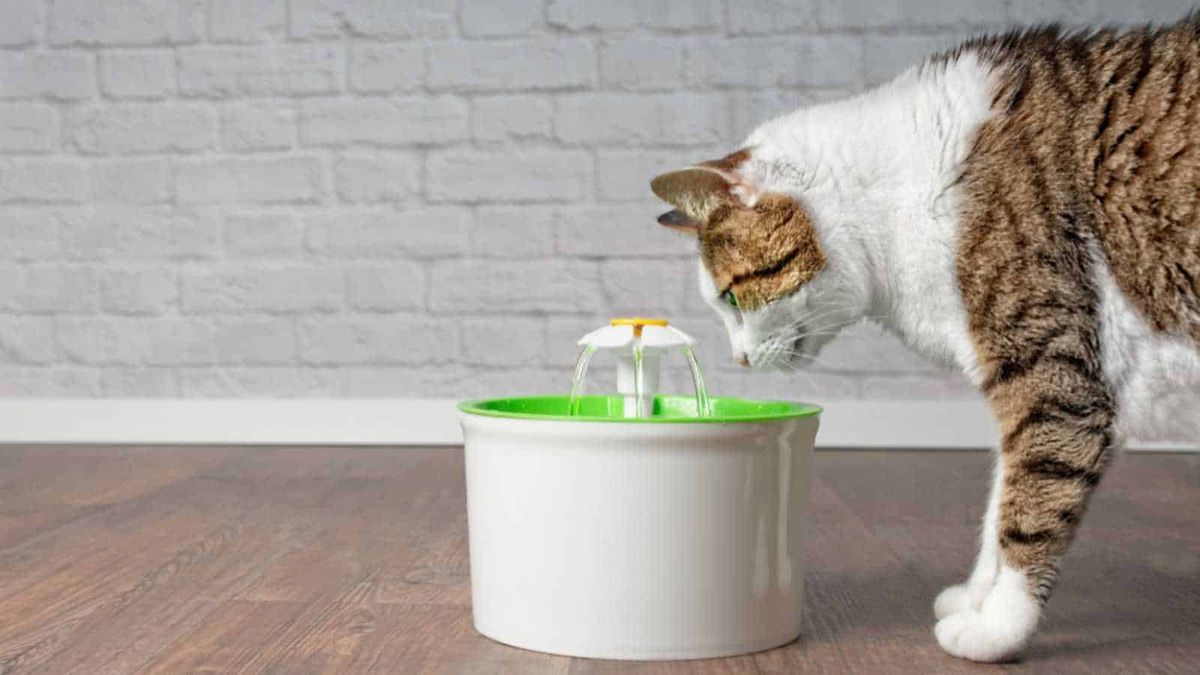
2. The Cats and the Automatic Water Dispenser In my house, there is an automatic water dispenser. Its mechanism is simple: whenever a cat is sensed nearby, it dispenses water at one-minute intervals.
When the first cat approached the dispenser for the first time, it stood there, but no water flowed. Growing anxious, it began to scratch the floor with its paws. After a short while, the one-minute mark was reached, and the water began to flow. In the cat’s cognition, a clear causal relationship was established: Scratching the floor ➔ Dispensing of water.
The cat cannot see the internal circuitry; it cannot comprehend the temporal settings; it has no grasp of the sensory mechanism. Yet, it constructed a Model. From that day forward, before every drink, it would scratch the floor. And—every single time—it succeeded.
Later, we brought home a second cat. The second cat observed the first and began to imitate the behavior. Thus, in the world of the cats: Water is obtained through labor. The form of that labor is scratching the floor. Furthermore, this observation is repeatable and verifiable.
Until one day, we adjusted the timer or perhaps cut the power. Scratching no longer produced water. The model was falsified. Yet, because water must eventually flow, they might generate a new model—perhaps tilting their heads over the dispenser—until that, too, is falsified by the next mechanical adjustment. They may grow closer to the truth, or remain entirely irrelevant, but as long as they facilitate the experience of drinking, they establish stable, verifiable causal relationships.
2.1 What Does This Story Demonstrate?
- First: The cat’s model is effective.
- Second: Its causal inference is incorrect.
- Third: Its model is verifiable within a stable structure.
- Fourth: Its "Scientific Spirit" is complete.
The cat achieved an entire scientific process through Observation, Correlation, Repeated Verification, and Stable Attribution. Yet, it never touched the actual structure of the water dispenser. It touched only the Stable Association of Phenomena.