59|Schopenhauer: Will, Representation, and the Deliverance of Aesthetics
Chapter XXVI | Schopenhauer: Will, Representation, and the Deliverance of Aesthetics
—The Structure of the Mode of Presence as a Recognized Philosophical Paradigm
Introduction: The Philosophical Forerunners of Presence How Schopenhauer Provided Structural Evidence for "Cognition After Language"
In the preceding chapters, we have proposed a radical demarcation that alters the very structure of Epistemology: the ontological distinction between Linguistic Cognition (L-mode) and Non-linguistic Cognition (P-mode). We have demonstrated that:
- Language is inherently incapable of accurately cognizing Truth because it necessitates a structural compression:
- It must sever the continuous manifestation;
- It must objectify and conceptualize;
- It must maintain a sense-order through judgment. Thus, the Linguistic Mode remains eternally trapped within a filtered and fragmented stratum.
- The Cognition of Truth must occur After Language—that is, within a consciousness-structure that is non-objectified, non-judicative, and non-linguistic.
- This structure is the "Mode of Presence":
- Art provides the structure of manifestation;
- Emotion provides the metric of intensity;
- Nature provides the holistic immanence;
- Creative Consciousness provides the breakthrough of cognition.
These elements collectively reveal that genuine cognition arises not from language, but from the structure of manifestation itself. We arrive, therefore, at a central thesis: To cognize Truth, Man must step beyond Language and enter the structures of Presence found in Nature, Art, Aesthetics, and Emotion.
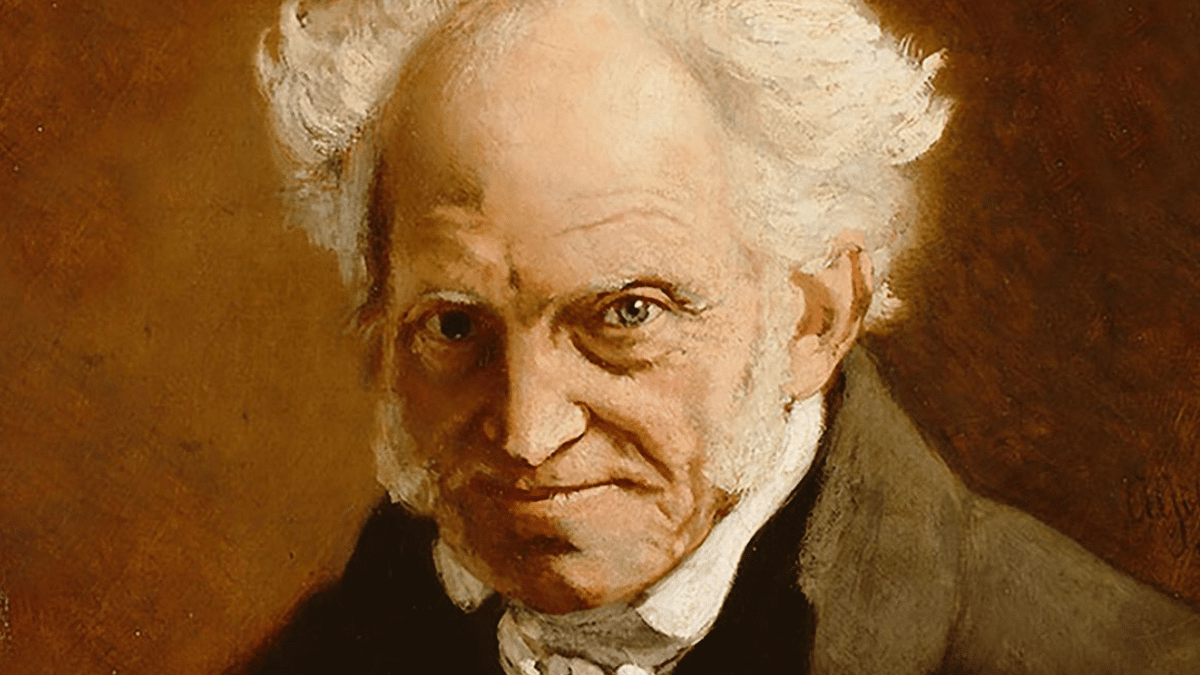
Schopenhauer: The Forerunner Closest to Presence However, the history of Philosophy is not a stranger to this path. We are not the first to discover the limitations of language or to assert that rational structures cannot reach the Noumenon. Throughout history, many have critiqued the finitude of Reason and sought a mode of knowing beyond representation. While their efforts did not coalesce into a complete system, they provided vital evidence for what we now term the "Mode of Presence." They touched upon the same requirement: to reach Truth, Language must abdicate, the Subject must abdicate, and Representation must fail.
Among all philosophers, Arthur Schopenhauer’s thought is most structurally isomorphic to our own. He clearly distinguished between:
- Representation (the world projected by the structures of consciousness);
- Will (which he deemed the Noumenon of the world, though characterized as a "blind impulse").
He observed that only when the Subject’s will falls silent does Truth enter consciousness as a Whole. This is a core structure of Presence. He identified Art, Aesthetics, and the "Stillness of the Subject" as the means to leap beyond representation and touch the shadow of the Noumenon.
Yet, we must offer a calibration here: Schopenhauer misidentified the Noumenon as "Blind Will." In our system, Schopenhauer’s "Will" is not the pure metaphysical Noumenon, but a low-dimensional composite image projected by "Vital Impulse + Rational Causal Framework + Temporal Linearity." Will is merely a residual shadow of the higher Noumenon; the true Noumenon is the 1st-Dimensional Absolute Truth (God). Nevertheless, Schopenhauer remains the thinker most proximal to the "Mode of Presence."
The Mandate of This Chapter: Re-situating Presence within the Philosophical Lineage By analyzing Schopenhauer, we shall complete three tasks:
- Establish the Intellectual Lineage of "Presence": Demonstrating that our structure is not an isolated invention but has deep, antecedent exploration in the history of Philosophy.
- Expose the Limits of Language through the Distinction of Representation and Noumenon: Schopenhauer provides the earliest "Epistemology After Language."
- Validate the Structural Necessity of Presence through Aesthetic Contemplation: Schopenhauer’s aesthetic philosophy is essentially the precursor to the Mode of Presence.
Our objective is not to "explain" Schopenhauer, but to re-read Schopenhauer through the language of Presence. He becomes:
- The forerunner of the Mode of Presence;
- The founder of the possibility of Cognition After Language;
- The first philosophical describer of the Ontological Stratification.
The task of this chapter is to unfold these structures with absolute clarity.