76|The Homecoming of the Prodigal
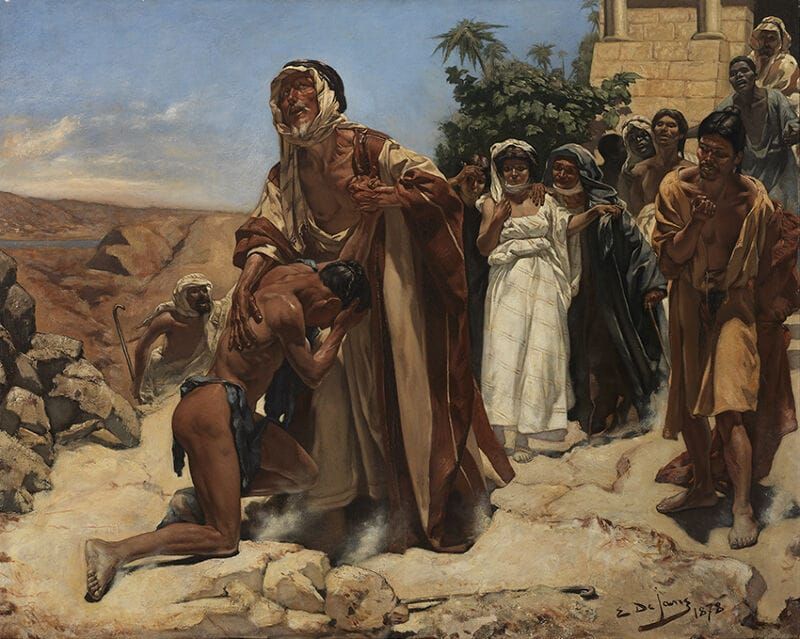
Chapter XXX | The Homecoming of the Prodigal
Introduction | The Symbolic Structure of the Prodigal, the Elder Brother, and the Father
In our preceding discourses, we have primarily derived the structure and necessity of Faith from an epistemological vantage point. In this final chapter, we turn toward a more symbolic narrative, employing a classic story to unveil the structural relationship between Humanity and Truth.
The story itself is starkly simple, yet possesses a symbolic depth that has compelled re-reading across the ages: A father has two sons. The younger son, impetuous and eager to escape the domestic order, demands his portion of the inheritance and departs for a far country. Initially, he experiences a phantom happiness and a false sense of freedom. Yet, having squandered his father’s substance, he falls into abject poverty—reaching a nadir where he longs to share the fodder of swine. At the end of his own resources, he contemplates the possibility of return, deeming himself no longer worthy of sonship and hoping only for the station of a hired servant.
When he gathers the courage to approach the threshold of home, he discovers, unexpectedly, that his father has been watching for him. Without a word of reproach, the father runs to meet him, embraces him, clothes him in the finest robe, places a ring upon his finger, and commands a great feast for his return.
Meanwhile, the elder son, who remained loyal to the household, obeyed every rule, and performed his duties with diligence, remains outside. Upon learning of the celebration for his profligate brother, a bitter sense of injustice arises within him. He believes his own long-term obedience and labor have never been so honored, while the brother who squandered everything is welcomed with excess. The father, however, corrects the elder son, revealing that his "loyalty" was not born of love for the father or the brother, but from a self-righteous desire to represent the father—to be the sole heir and proxy of the father’s authority.
The significance of this story lies not in domestic ethics, but in its presentation of three fundamental structures—the Father, the Prodigal, and the Elder Brother—which we may interpret as three distinct spiritual postures:
- The Father symbolizes the Primordial Absolute—what we have termed 1st-Dimensional Truth or God.
- The Younger Son (The Prodigal) symbolizes the Rational Subject, who breaks through established order and uses free will to detach from the Source.
- The Elder Brother symbolizes the Religious Structure—staying within the order and obeying the rules, yet consumed by self-righteousness. He represents the Pharisees and Scribes whom Christ critiqued: those who believe they represent the Father, yet are structurally isolated from Him.
Consequently, this narrative is not a moral judgment, nor a system of rewards and punishments; it is an inquiry into the Relationship between three spiritual structures. It examines why Reason must wander into the far country, why Religion clings to the rigidity of order, and why the Absolute remains the perpetual Source and Destination for both.
This symbolic structure is neither mere theological exegesis nor a simple ethical allegory. It is a Universal Cognitive Metaphor—a foundational landscape revealing how humanity oscillates, loses its way, and eventually returns between the poles of Freedom, Order, and Truth. This chapter will re-interpret the relationship between Man and Truth from this vantage point: analyzing why free reason inevitably distances itself from the Source, why religion necessarily clings to order and thereby eclipses Truth, and why Truth eternally awaits the return of Reason with an unchanging countenance.