AI 3.0: The Structural Revolution
Beyond the Brute Force of Scaling Laws
The current trajectory of Artificial Intelligence is reaching a critical inflection point. As we pour billions into massive GPU clusters and push parameter counts toward the infinite, we must ask: Are we building true intelligence, or merely perfecting the art of digital waste?
The "New Civilization OS" views the next leap in frontier technology not as an increase in scale, but as a fundamental shift in Architecture.
I. From Parameter Scaling to Structural Resonance
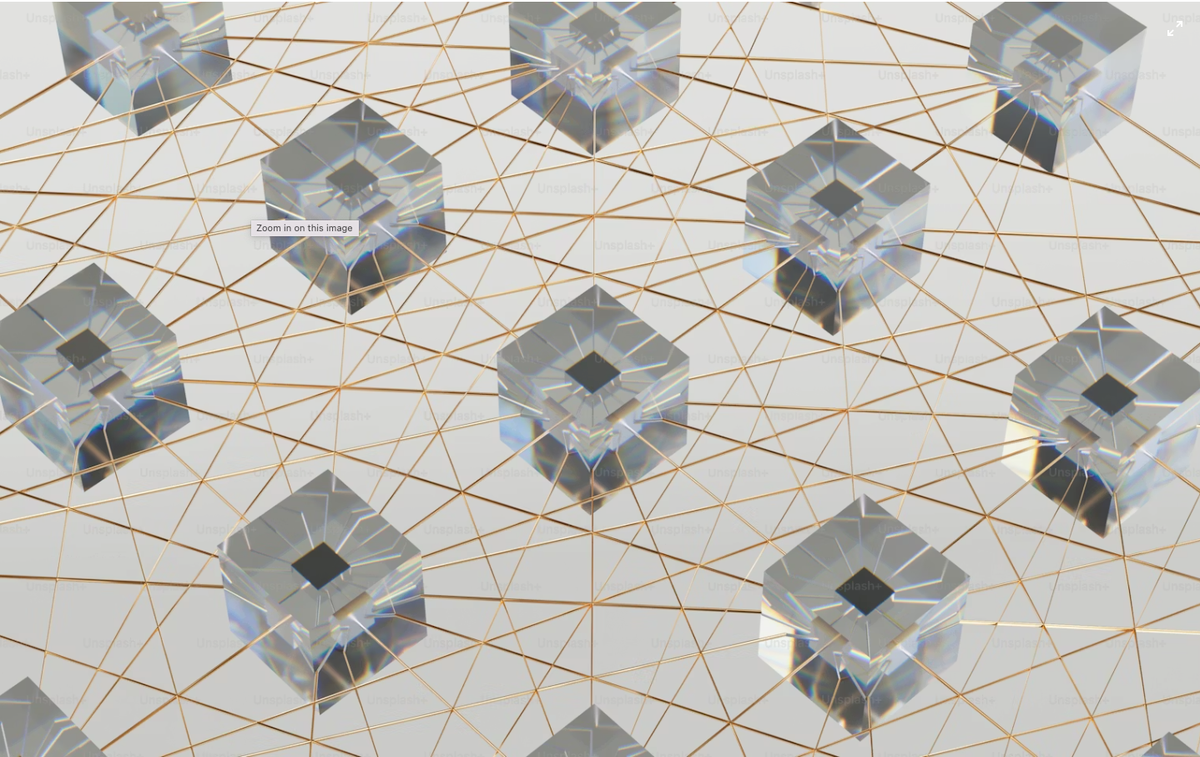
The intelligence of a system is not a function of its node density, but of its connection geometry. Current Large Language Models (LLMs) rely on the linear stacking of data—a "brute force" approach that attempts to simulate intelligence through sheer volume.
True AGI will not emerge from bigger models; it will emerge from the non-linear resonance of inter-node relationships. We must move beyond the "Scaling Law" and toward the "Structure Law": Intelligence is the emergence of order within the network, not the strength of an isolated node.
II. The Law of Extra-Node Value
In the logic of the New Civilization OS, a node’s value is defined by the network outside itself. Current AI is trapped in "Node-Centric" logic—optimizing internal weights while ignoring structural context. The next leap in machine intelligence will involve "Inverse Definition":
The Yahoo Era: Single-point indexing.
The Google Era: Structural discovery (PageRank).
The Current AI Era: Node-internal simulation.
The Structural AI Era: Inferring individual purpose through collective network data.
The solution to a problem never lies within the node where the problem manifested. It lies in the structural reconfiguration of its connections.
III. The Tao of Computation
Nature does not waste. The current path of AI is a violation of the "Tao"—relying on excessive energy and linear entropy to simulate thought. An infant's brain operates on 20 watts; a server farm requires megawatts. This discrepancy proves that our current algorithms are fundamentally misaligned with the geometric efficiency of the universe.
When the era of GPU dominance and "Brute Force" training ends, the era of Structural AI begins. We do not need more chips; we need a more divine geometry of connection.
IV. The Strategic Divergence
True competition in frontier technology does not happen on the battlefield defined by the incumbent. To compete in the era of GPU scarcity is to play a losing game of catch-up.
We are building the next paradigm: A Non-Linear Network Model. By allowing nodes to self-label and define one another through structural relationships rather than centralized computation, we bypass the need for massive hardware reliance.
This is the leap from the "Internal Combustion" of AI to the "Superconductivity" of Intelligence.