There Is No Such Thing as Anti-Brand — A Response to Paul Graham
Paul Graham is right about all of it. But he never asks the more interesting question: why did it work? Why did men — specifically men — decide that a mechanical watch was worth ten, fifty, a hundred thousand dollars once it stopped being the most accurate way to tell the time?
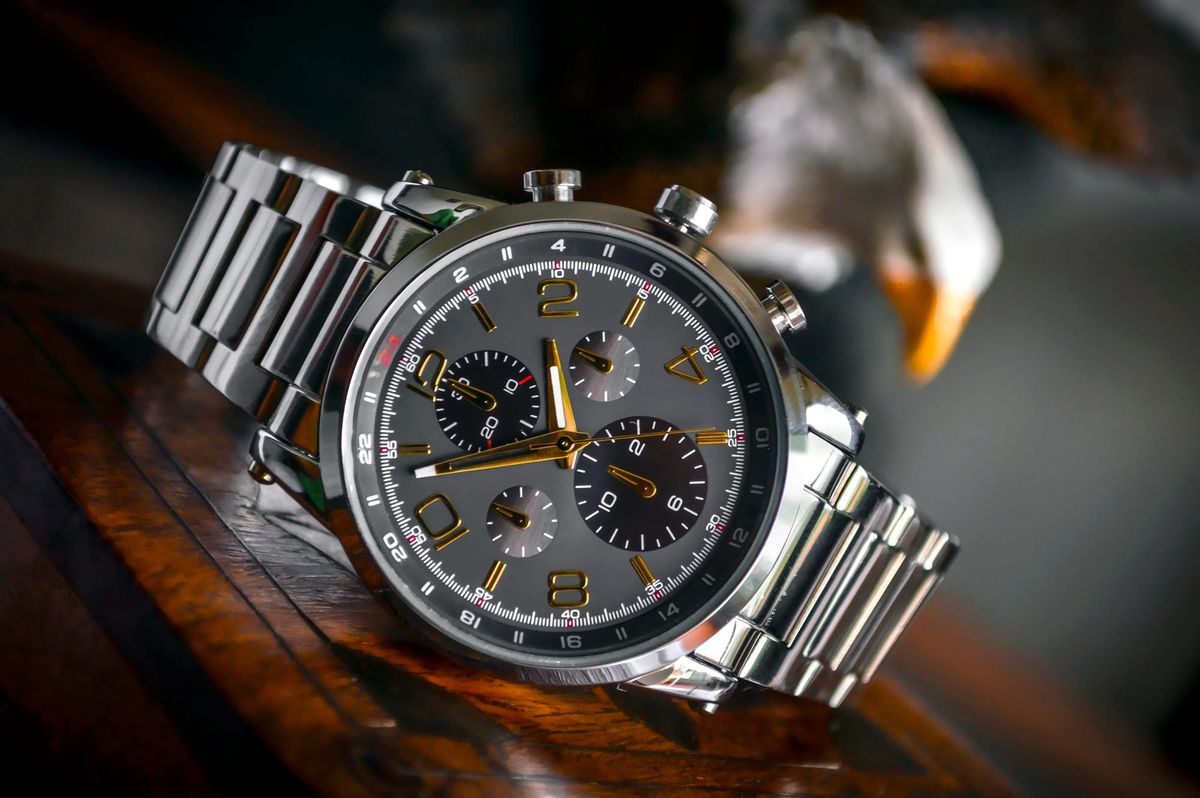
Paul Graham recently published a long essay on the Swiss watch industry. It's well written and historically thorough. But it stops one level too soon.
He traces how the industry survived the quartz crisis by transforming from precision instrument makers into luxury brands. He documents the artificial scarcity, the asset bubble management, the war on good design. He ends with a kind of resigned disgust: brand has won, and the world it creates is weird and bad.
He's right about all of it. But he never asks the more interesting question: why did it work? Why did men — specifically men — decide that a mechanical watch was worth ten, fifty, a hundred thousand dollars once it stopped being the most accurate way to tell the time?
The answer is simple, and once you see it you can't unsee it.
A mechanical watch is the only piece of jewelry a man can wear without social penalty.
The jewelry frame
Women have always had jewelry. Rings, necklaces, earrings, bracelets — nobody questions it. But a man wearing a gold chain is mafia. A man wearing a signet ring is trying too hard. A man wearing a bracelet is making a statement nobody asked for. The only exception, for over a century, has been the watch. It arrived as a tool — you need to know the time — and it stayed as something else entirely once the tool function became irrelevant.
Graham spends most of his essay explaining the supply side of this transformation: how watchmakers managed scarcity, built boutiques, designed for brand recognition rather than function. But the demand side is more interesting. The question isn't how they sold it. The question is why men were willing to buy it.
The answer is that men need jewelry for the same reasons women do. To signal, to display, to mark themselves as belonging to a certain tribe or having achieved a certain status. The demand was always there. What changed was the social permission. A Rolex isn't jewelry — it's a precision instrument that happens to cost forty thousand dollars. The fiction is thin, but it's load-bearing. Remove it and the whole thing collapses.
Graham mentions this in passing — "expensive mechanical watches now serve as de facto jewelry for men" — but he treats it as a footnote rather than the thesis. It is the thesis. Everything else follows from it.
The De Beers playbook
Once you see the jewelry frame, the entire history Graham documents starts to look familiar. It's the De Beers playbook, applied to metal and gears instead of carbon.
Diamonds are not scarce. The earth is full of them. De Beers built a century-long cartel to control supply, then commissioned the most successful advertising campaign in history — "a diamond is forever" — to transform a commodity into an heirloom. The genius wasn't the diamond. It was the story: that a diamond encodes a relationship, carries memory, must never be sold. Selling a diamond, they implied, was like selling your marriage. This is why the secondary market for diamonds is so weak. The spell only works in one direction.
Patek Philippe's "you never truly own a Patek Philippe, you merely look after it for the next generation" is the same sentence. Different words, same structure. We are not selling you an object. We are inducting you into a story that extends beyond your own lifetime. The object is the price of entry.
What Graham calls "asset bubble management" is just what happens when you run this playbook in a world with functioning secondary markets. You have to keep buying your own product back to prevent the spell from breaking. You have to police your customers to ensure they're participants in the story, not arbitrageurs exploiting it. It's strange, as Graham says. But it's not mysterious. It's what jewelry has always required, just made visible by the transparency of modern markets.
What the story says
The more interesting question, which Graham doesn't ask, is what specific story each brand sells. Because not all jewelry narratives are the same.
Rolex sells achievement. It's the watch you buy when you've made it — whatever "made it" means to you. Its genius is that it works across categories: the surgeon, the banker, the athlete, the entrepreneur. It doesn't require you to subscribe to a particular definition of success. It just says: you succeeded. This is why it's the dominant brand. It has the widest net.
Patek sells something more exclusive and more fragile: legitimacy. Not just wealth, but the right kind of wealth. You can't simply buy a Nautilus. You have to earn the right to buy it, through years of purchases and the approval of people who've decided you're the right sort of person. This is old money signaling to new money: we are not the same. The watch is a certificate of admission to a particular class.
The difference matters. Rolex wearers are announcing an achievement. Patek wearers are announcing a position in a hierarchy. These are not the same thing, and they attract different people for different reasons.
The gap in the market
Graham ends his essay with advice to stay away from brand entirely. Follow interesting problems, he says. That's where golden ages are.
He's right, but he's also describing what he already does. His essay is, among other things, a statement of identity: I'm the kind of person who sees through this.
Which points to a real gap. There's an entire category of men — disproportionately concentrated in places like San Francisco, increasingly influential globally — who have the resources to buy expensive watches but for whom neither the Rolex story nor the Patek story works. The Rolex story is too crude: it celebrates a definition of success they find embarrassing. The Patek story is too hierarchical: it asks them to seek approval from gatekeepers they don't respect.
What they need is a third story. Not "I succeeded" and not "I have permission." Something more like: I'm building something different. I'm not playing the old game at all.
Nobody has told that story yet — at least not in an object you can wear. Apple Watch tried, but it solved the wrong problem. It replaced the jewelry with a notification device. Whatever the next thing is, it will need to work as jewelry first: beautiful, durable, and sufficiently expensive to function as a social signal. The story it tells will need to be coherent and true — true enough that the people who wear it actually believe it, not just perform it.
That's a harder problem than making a good watch. It's the problem De Beers solved in the 1940s, and that Patek has been managing ever since. The mechanics are known. What's missing is a story worth telling.
Brand is a declaration
Graham's advice is to stay away from brand entirely. But he's missing something: brand isn't a merchant's invention. It's a human need. We need to communicate to others who we are, where we belong, what we believe. Brand is just the most efficient carrier for that need. Graham's own essay is a brand move — it declares: I'm the kind of person who isn't manipulated by brands. That's an identity statement. It's structurally identical to wearing a Rolex. The carrier is different; the impulse is the same.
Which means anything that can carry a clear declaration can become a brand. The carrier itself doesn't matter. What matters is three conditions: it must be visible, it must be scarce or distinctive, and it must have a sufficiently legitimate reason for someone to carry it long-term — otherwise it feels contrived.
Consider "No Kings" as an attitude. It's a genuine declaration that lives in a lot of people: opposition to concentrated power, refusal to be governed by any single person or narrative. The story has real force — arguably more contemporary tension than anything Rolex sells. But it has no good carrier. A golf cap? Too pointed, and it's the other side's symbol — the irony is too loud for daily wear. A tennis cap? Closer, but still wrong — and not just for aesthetic reasons.
The problem is that a tennis cap has no independent, neutral reason to exist. You can answer the question "why are you wearing a watch" with "because I need to know the time." That answer lets you carry the object without acknowledging that you're making any identity statement at all. A cap has no such alibi. You wear it, and you're expressing something, and everyone knows you're expressing something. That transparency destroys the elegance of the signal. The most effective identity signals were never loud declarations — they were frequencies readable only by the right people, invisible to everyone else. Once everyone can decode the signal, it loses its value.
This is exactly why the mechanical watch succeeded so completely — it solved this problem. Nobody asks why you're wearing a watch, just as nobody asks why you're wearing shoes. It has a sufficiently mundane reason to exist on your wrist. And that neutral shell means whatever story it carries can be transmitted without effort — circulating only among those who know it, invisible to everyone else as just a watch.
Bored Ape Yacht Club briefly achieved the same thing in the digital world. A blurry pixel image, no physical form, no function whatsoever, yet it became one of the most effective tribe membership cards in recent history. It satisfied the scarcity and visibility conditions — on social media, your profile picture is your wrist, and everyone can see it. Its limitation was that the display surface was too narrow, and visibility disappeared the moment you moved platforms.
So the real question was never "should there be brands." It was always "what makes a good enough carrier." A small embroidery on a shirt cuff, if the story is right, could make that shirt worth a hundred times its price. Not because of the thread. Because it lets the wearer complete a full self-declaration without saying a word — to the people who understand it.
That's what Graham actually missed. The problem with brand isn't brand itself. It's that most brands are telling old, exhausted stories. The thing worth doing is always the same: find a true, not-yet-told declaration, and then find a good enough carrier for it.
The crisis is the opportunity — but only if you think backwards
The Swiss watch story has one more business lesson worth naming separately.
When Japanese quartz made timekeeping extremely cheap, the instinct of most Swiss manufacturers was to keep competing on the same track — thinner, more accurate, less expensive. That road led to ruin, because you can never beat a competitor at a game they defined. Omega tried it and went bankrupt.
A few did the opposite. If timekeeping is now cheap, make something expensive. If quartz is thin and light, make something heavy. Then find a legitimate reason for "expensive and heavy" to exist — and they found it in jewelry. The rest is the history we've already told.
This thinking is more valuable than Swiss watches. In any industry, when a core function gets commoditized by technology, the right question isn't "how do we keep competing on this function." It's "if this function is now free, what has become more scarce." The answer is usually in the opposite direction from where everyone is looking.
Tesla is another instance of the same logic. Electric cars existed before Tesla — there were companies building them before 2008. But those cars were all trying to prove that electric could be "cheap enough" and "practical enough," defending themselves within the framework of the combustion car. Tesla reversed it: make the electric car more expensive than most combustion cars, then use the instant torque of electric motors to benchmark against top-tier sports cars on acceleration. It didn't compete within the definition of "transportation." It redefined what an electric car was — not a poor person's compromise, but a new standard for performance.
The core of this strategy isn't "differentiation" — that's jargon, not a way of thinking. The real structure is: find the underlying assumption your competitors depend on, then flip it. When everyone is asking "how do we go cheaper," ask "how do we go more expensive." When everyone is asking "how do we go lighter," ask "how do we make heavy meaningful." After the flip, there's one more step: find a real scenario where the new position makes sense naturally — not by declaration, but by fit.
The Swiss found their scenario in men's jewelry. Tesla found theirs in performance cars. The next flip is already happening somewhere. It just hasn't been named yet.
— A response to Paul Graham's essay on the Swiss watch industry