14.2 | Verification of Other Theories

Verification via Monetary Theory: Velocity over Stock
The most critical formula in monetary economics: MV = PQ (The Fisher Equation)
- M = Money Supply
- V= Velocity of Money
- P= Price Level
- Q= Output
Conclusion:
Possessing more money does not represent greater wealth. What truly creates wealth is the Velocity of Money (V). In the framework of Connectivity Economics, money is merely a medium that facilitates the connection between nodes; wealth is the integration of the connections completed by that medium over time.
Verification via Platform Economics: Velocity = Wealth-Generating Capability
Why is TikTok valued at hundreds of billions of dollars?
It is not because it "possesses content," but because its Content Velocity is 100 times higher than that of all traditional media. It reduces the friction (F) of content-to-user matching to near zero, allowing the system to complete a staggering number of "experience connections" per unit of time.
Why is Amazon worth trillions?
It is not because it "possesses commodities," but because the Velocity of Logistics and Transactions is equivalent to wealth itself. Amazon's core competitiveness lies in its infrastructure (C) and institutional efficiency which together maximize the turnover speed of the entire system.
Why has OpenAI experienced explosive growth?
It is not merely because of the models themselves, but because the Velocity of Output Information is high enough to alter the industrial structure. It has automated the "information-to-logic" connection, allowing V to reach a level previously unimaginable for human nodes.
14.3 | Correspondence of the Three Laws of Fluid Dynamics in Economics
1. The Continuity Equation
In Physics:
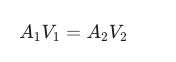
Economic Correspondence:
- A = Social Engagement (Number of participants, area of social connectivity)
- V = Velocity of Value Flow (Flow of currency, flow of attention)
Economic Conclusions:
- Scaling Effect: As engagement increases (A), the velocity of value flow naturally increases (V ), leading to greater wealth.
- Closed Systems: A closed organization equals a small A; it is forced to excessively increase V just to maintain the same volume of flow.
- Open Systems: An open system provides a large A, allowing for the generation of massive wealth without requiring V to reach extreme, unstable levels.
- Platform Economics: Platforms generate exponential value because they drastically expand A (the connectivity area), which naturally elevates the total systemic flow.
Connectivity Economics Equivalent Equation:

2. The Bernoulli Equation
In Physics:
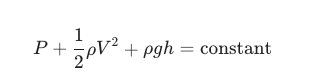
Expression: In an ideal fluid, total energy is conserved.
Economic Correspondence:
- P = Social Pressure (Regulation, monopoly, resistance/friction)
- V = Velocity (Flow of capital, relationships, or data)

- gh = Economic Potential (Technology, culture, education)
Economic Corollaries (Critical Conclusions):


Manifestations:
- Slower innovation
- Stagnation of capital
- Information lag
- Decline in social vitalityThis provides a physical explanation for late-stage capitalist stagflation and inequality.
Conclusion 2:

Effects of a Non-Possessive Economy:
- Reduced institutional friction
- Increased social "velocity"
- Higher wealth generation rate
- Reduced inequality
- Enhanced systemic stability

This explains why nations with high levels of education can sustain high-velocity economies. Technology and culture act as the "potential energy" term, directly raising the maximum wealth boundary the system can reach.
Conclusion 4: Bernoulli's Equation Explains the "Advantage of Non-Possessive Systems"

"Connectivity Liberty" is precisely the economic manifestation of the Bernoulli Equation.