15 | The Law: The Minimum Way of Restraining the Self
Following the Flood, God established the Covenant of the Rainbow, promising never again to reset humanity through such a deluge. How then was He to deal with a race of men still possessed by the Ego, the Dividing Mind, and insatiable Desire?
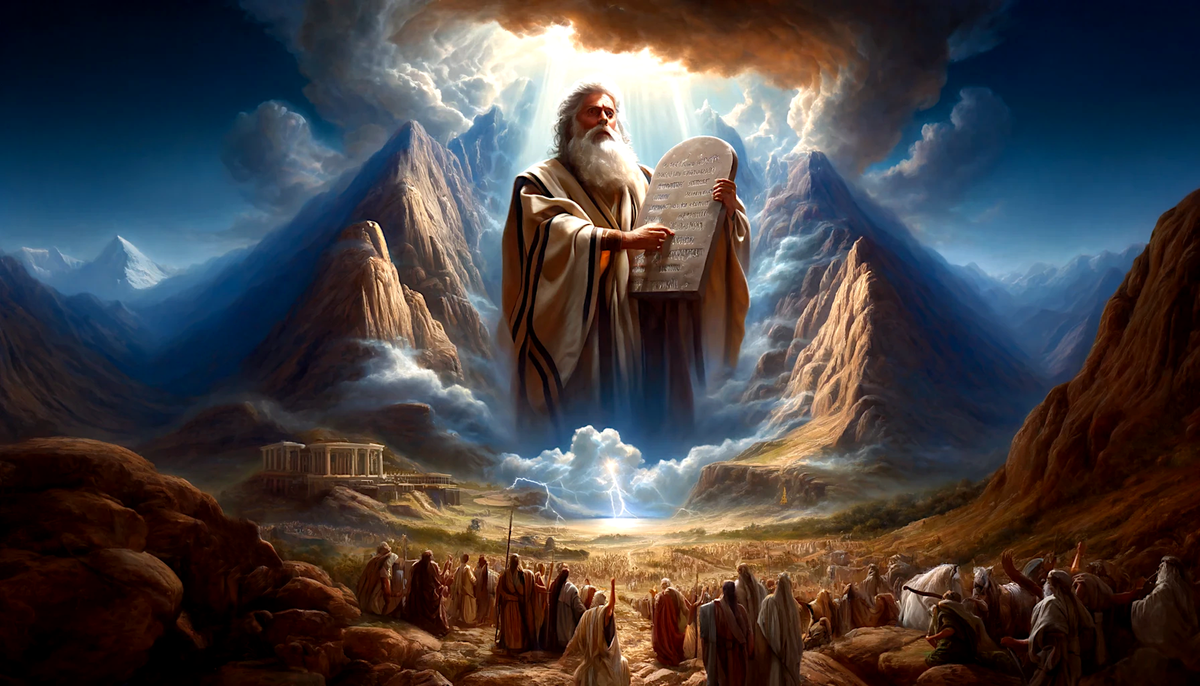
The answer was the institution of the Law. The Law is not a whip or a shackle; it is a "minimum defensive line for life."
I. The Law as Protection, Not Punishment: Preventing Rapid Collapse
Humanity, having departed from Eden, carries a triple burden of limitation:
- Mortality: A finite span of life.
- Finitude: Extremely localized understanding and control.
- The Structure of Original Sin: The Ego and the Dividing Mind are etched into the core of existence.
The overlapping of these three forces leads civilization naturally toward stratification, exploitation, addictive desire, violent conflict, and a pervasive sense of futility. Without boundaries, human civilization would once again slide rapidly into the state of the pre-Flood world. Thus, God established the Law not for the sake of control, but for stewardship. The Law is the "minimum safety net" cast for the runaway child, ensuring he does not utterly destroy himself and others.
II. The Core of the Law: Restraining the Self and Protecting Relationship
Jesus summarized the entirety of the Law in a single command: "Love the Lord your God with all your heart... and love your neighbor as yourself" (Matthew 22:37–40). In other words, the core of the Law is Love, but in a fallen world, this can only manifest as the "restraint of the Self."
- "Thou shalt not kill": Restraining the Self to recognize the intrinsic value of another's life.
- "Thou shalt not commit adultery": Restraining the Self to refuse treating another’s body or marriage as a consumable commodity.
- "Thou shalt not steal": Restraining the Self from plundering the fruits of another’s labor through force or cunning.
- "Thou shalt not covet": Restraining the Self to prevent internal desire from consuming everything in sight.
Every commandment serves a single purpose: to bind the Ego, protect the "Other," sustain relationship, and preserve the community. Thus, the Law is the institutionalized form of "Minimum Love." It is not the fullness of Love, but it prevents humanity from plummeting into the abyss of total inhumanity.
III. The Law Restrains, but Cannot Heal; Only Grace Removes the Self
This is the central hinge of Biblical theology: The Law can constrain a man, but it cannot cure him; it can diagnose the problem, but it cannot alter the essence.
- The Law can "manage behavior," but it cannot dismantle the internal Ego-structure.
- The Law can tell a man "what is sin," but it cannot bestow the "life that does not sin."
As St. Paul wrote: "Through the law we become conscious of our sin" (Romans 3:20), and "What the law was powerless to do because it was weakened by the flesh..." (Romans 8:3). Therefore:
- The Law is the Signpost; Grace is the Destination.
- The Law is the Foundation; Life is the House.
- The Law ensures we do not die too quickly; Grace allows us to truly live.
That which truly extinguishes the Self, dissolves the Dividing Mind, leads from duality to unity, from scarcity to abundance, and from fear to the Father—is not a set of rules, but the Life of Christ itself. Only Life can heal Life; regulations can never achieve this.
Summary | Original Doctrine 15
- The Law is not an instrument of punishment, but a "Minimum Line of Protection" established for fallen humanity to prevent the rapid collapse of civilization.
- The essence of the Law is Love, manifesting as the institutionalized restraint of the Self for the sake of the other.
- The Law constrains behavior and reveals sin but cannot heal the heart; only Grace—the Life of Christ—can dismantle the Ego and restore unity.
The Logic of Rescue: The Law keeps man from dying in his sin; Grace allows man to truly live in God. These are the two layers of Divine rescue: Preserving Life (Law) → Renewing Life (Grace).