19 | The Mirror of Vanity: Solomon’s Ultimate Test
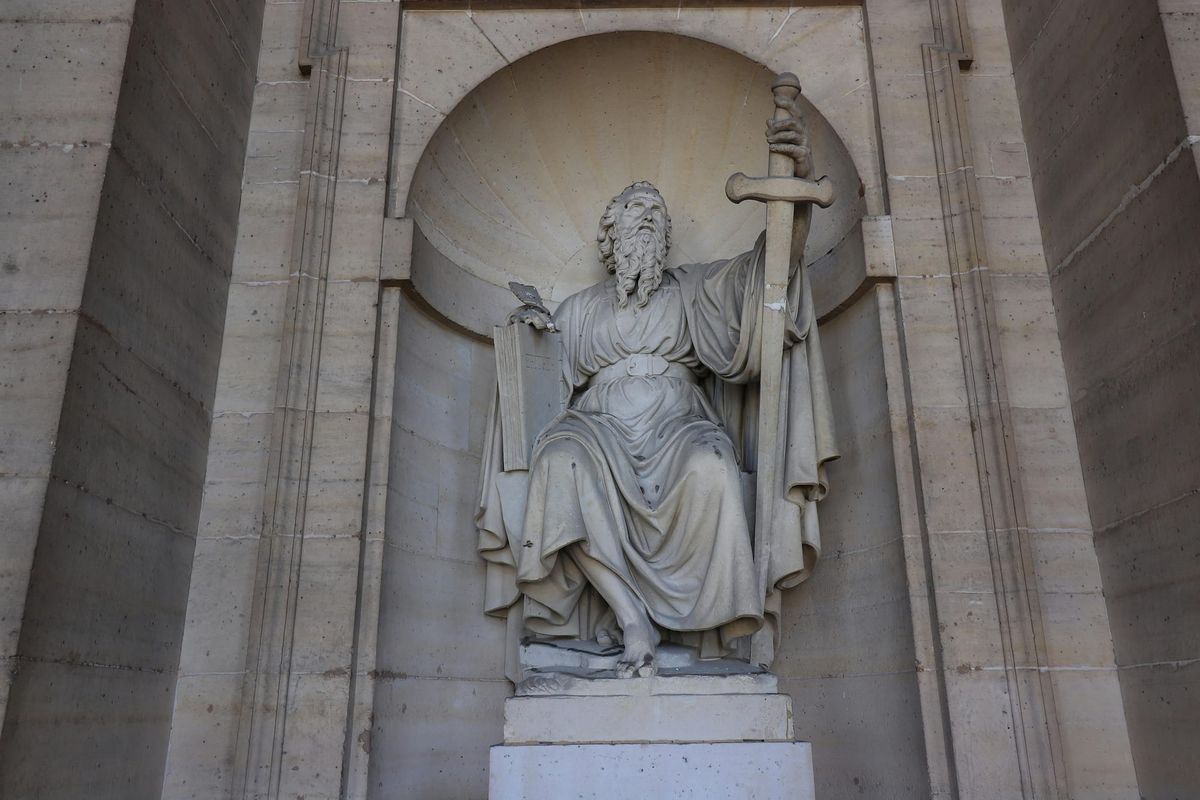
King Solomon conducted the most exhaustive "Happiness Experiment" in human history. He pushed everything Man can pursue to its absolute limit:
- The grandest palaces and monuments;
- The most lavish banquets and pleasures;
- Unmatched wealth, power, and prestige;
- The highest reaches of wisdom and learning;
- The greatest public works and achievements;
- The abundance of consorts and romantic love.
Then, he delivered a conclusion that shakes the human heart to its core: "Meaningless! Meaningless! Everything is meaningless" (Ecclesiastes 1:2). This was not a cry of cynical pessimism, but a scientific discovery: within a structure that has departed from God, nothing the Ego pursues can bring lasting joy. For once Man leaves God, every pursuit slides into the same pattern: Attainment → Excitement → Neural Fatigue → Deeper Emptiness.
Solomon’s experiment reveals three grand truths.
I. Human Enjoyment Has a "Capacity": Beyond This "Limit," Joy Turns to Vanity
Solomon does not deny the goodness of enjoyment; rather, he points out that the human body, soul, and nervous system can only sustain a finite amount of stimulation. When enjoyment exceeds this "Limit," it begins to consume life:
- The reward system is overdrawn and broken.
- The threshold for desire is pushed ever higher.
- What once brought joy becomes merely mechanical stimulation.
- The soul grows increasingly numb. He is not saying "Do not feast or play," but rather: Enjoyment must remain within the boundaries set by God to remain Joy. Beyond those limits, it leads only to vanity and destruction.
II. Labor is the Foundational Structure of True Joy
Throughout Ecclesiastes, Solomon repeats a deceptively simple insight: "That everyone may eat and drink, and find satisfaction in all their toil—this is the gift of God" (3:13). He points out that:
- Man possesses a structural need to create, to give, and to bear responsibility.
- Man needs to invest his life into concrete reality and into the lives of others. This Labor does not yield a fleeting thrill, but rather a sense of presence, connection, utility, and meaning. True happiness is inseparable from the structure of "toil"—of dealing earnestly with the world.
III. The Fear of God and Obedience: The Final Answer
The final chapter of Ecclesiastes offers the only definitive proposition: "Fear God and keep his commandments, for this is the duty of all mankind" (12:13). Solomon, after a lifetime of extreme experience, summarizes it thus:
- He who does not fear God, no matter how much he acquires, ends in vanity.
- He who fears God, no matter how little he possesses, enters into Rest. Fear returns Man from the Ego to the Source of Life; Obedience allows Man to move from vanity into Reality.
IV. The True Structure of Happiness: Labor + Measured Enjoyment + Fear of God
Synthesizing Solomon’s experiment, the structure of happiness he reveals is:
- Labor: Connecting with the world through responsibility and contribution; living in reality.
- Measured Enjoyment: Receiving the good things of life with gratitude within the boundaries permitted by God.
- Fear of God: Knowing where life comes from and where it returns; letting all things find their center in the Source. These three are not in conflict; they are three dimensions of the same path. God’s "best" for us is perfectly aligned with the way we were designed to be happy.
V. The Ultimate Value of Ecclesiastes: Reflecting the Vanity of the "Self-System"
Solomon holds up a mirror to the extreme possibilities of life:
- The end of the Self’s pursuit is not fulfillment, but exhaustion.
- The extreme of pleasure is void; the extreme of achievement is weariness; the extreme of power is fear; the extreme of wisdom (apart from God) is sorrow. It is not that these things are inherently evil, but that they cannot carry the weight of "Meaning." Meaning resides only in God. Thus, the King lays down his pride and says: "The happiness you seek is not in the things you pursue, but in the One upon whom you lean."
Summary | Original Doctrine 19
- Solomon proved through extreme experimentation that within the system of the Self, all pursuits ultimately lead to vanity.
- Human capacity for enjoyment is "finite"; exceeding God’s boundaries leads to destruction and emptiness.
- Labor is an essential structure for human satisfaction and the sense of meaning.
- The fear and obedience of God are the ultimate foundations of human happiness.
- True happiness is found in the triad: Labor + Measured Enjoyment + Fear of God.
Conclusion: The way God designed Man is the very way Man is meant to be happy. Apart from the Designer, even the most extreme pleasures leave behind only a "Mirror of Vanity."