2.2.3 | Multi-Role Nodes in the Information Age
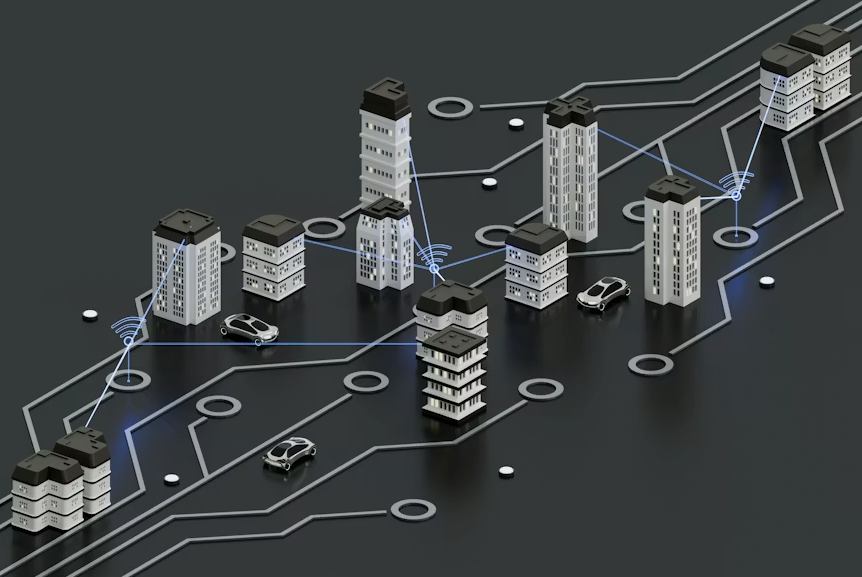
Before we venture further into the currents of the Information Age, we must pause to clarify a concept that is the very heartbeat of this work: The Node. The Node is the minimum functional unit of the Connectivity System. It is not synonymous with the "Individual," the "Firm," or the "Institution." Rather, it is the Locus of a specific connectivity function within a given structure.
A Node is defined not by its "identity," but by three fundamental, structural attributes.
I. The Node is Dynamic, Not a Fixed Entity A Node does not exist in a static state. The same soul, the same organization, may manifest as entirely different functional units across disparate sub-systems.
- In a Production System, one may be an Operational Node.
- In an Information System, the same soul may be a Propagational Node.
- In a Financial System, he may be a Passive Recipient Node. The Node is not "Who," but "What connectivity function is being sustained here and now."
II. The Node is Divisible, Not an Indivisible Atom The Node is not an atomic finality. Whenever the density and complexity of connection rise, a Node will naturally germinate Sub-nodes. A Firm-node splits into Research, Production, and Sales sub-nodes; a Technical-node bifurcates into Algorithm, Interface, and Platform. This divisibility is the very wellspring of systemic expansion. When a Node can no longer divide, the ceiling of the system’s complexity has been reached.
III. The Node is Mutable, Evolving Within the Web Nodes are not "assigned" permanent roles by some celestial bureaucrat; they are selected, shaped, and discarded by the connectivity environment. An Edge Node may evolve into a Critical Relay; an Execution Node may mutate into a Coordination Hub. The Node is a Fluid Response to the velocity and density of the flow.
IV. The Information Age: The Collapse of Switching Costs In the Industrial Age, roles were ossified: the worker was the hand, the manager the eye, and capital the heart. The boundaries were cast in iron. The genius of Information Technology lies in its capacity to slash the cost of role-migration. A single Node can now simultaneously:
- Produce information.
- Consume information.
- Transmit and Reconfigure information. Thus, the Multi-role Node is born.
V. The New Architecture of Division The traditional division of labor was an "Identity Arrangement"—one man, one function. In the Information Age, division becomes an "Instantaneous Connectivity State."
- A single Node participates in multiple, intersecting paths.
- Division is no longer measured by "Job Titles," but by "Connectivity Functions." This results in a web that is finer, more flexible, and resistant to permanent calcification.
VI. From "Job Division" to "Node Division" We have moved beyond Adam Smith’s "fragmentation of tasks" into the Dynamic Allocation of Functions. The Node is no longer "the person who does X," but "the unit sustaining function X at this precise moment." The system’s capacity to adapt is thereby heightened unto the infinite.
Summary of 2.2.3
- The Node is the foundational unit of the web.
- Nodes are Dynamic, Divisible, and Mutable.
- The Information Age permits a single Node to sustain Multiple Roles.
- Division has shifted from "Fixed Job Structures" to "Dynamic Functional States."