5.2.1 | The Steam Engine, The Internal Combustion Engine, and the Tie of Logistics
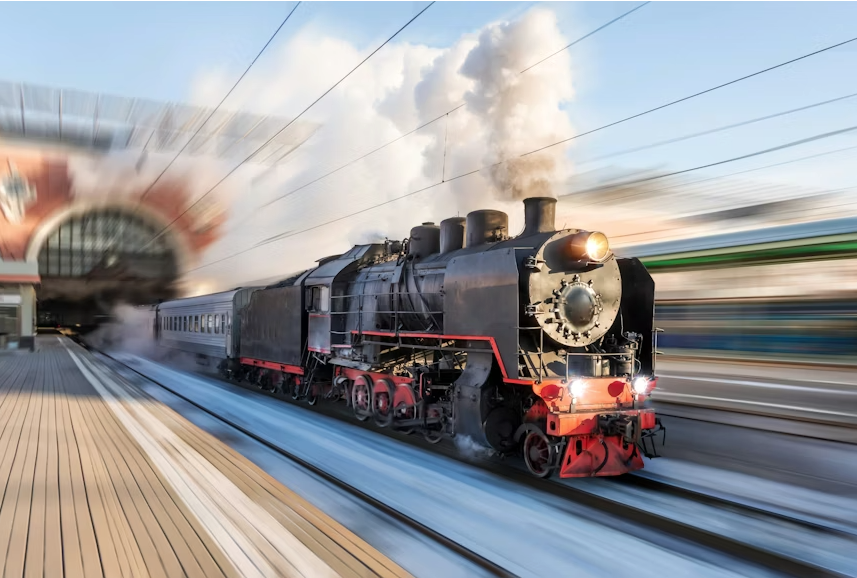
In the chronicles of human craft, the Steam Engine and the Internal Combustion Engine are far more than mere breakthroughs in the mastery of fire. Their supreme significance resides in this: For the first time in history, they systematically refactored the connectivity of the world at a physical stratum.
I. Space Transmuted into a Managed Variable Before the advent of the Steam Engine, the radius of human connection was shackled by the cruelest of physical decrees:
- Transit relied upon the weary muscle of man or beast;
- Distance was synonymous with ruinous cost;
- Sustained, stable, and vast connections were a phantom hope.
The Steam Engine shattered this cage. The Railway and the Steamship were not merely "tools of travel"; they were Pure Functional Modules of Connection.
- They produced no wares;
- They birthed no primary hunger;
- Yet they utterly transformed the Reachability of the Node. Space, thereafter, ceased to be a "Natural Obstacle" and became a Variable—to be compressed, dispatched, and reconfigured by the will of the Architect.
II. The Expansion of the Frontier Precedes the Harvest The first movement of the Railway and the Ocean Liner was not an exaltation of productivity, but an Exponential Expansion of the Connectable Node. Regions once entombed in isolation were suddenly:
- Grafted into the same pulse of Logistics;
- Bound into the same vision of the Market;
- Drawn into the same altar of Price.
This meant that Latent Connections began to transmute into Manifest Ties. Needs that were previously impossible to fulfill suddenly found the means of their grace. Economic change is ever the result of a connectivity shift, never its origin.
III. The Internal Combustion Engine: The Second Leap of Velocity If the Steam Engine answered whether a tie could exist, the Internal Combustion Engine and the wing of Aviation answered how swiftly it could pulse. The rise of the automobile and the aircraft granted the Logistics System three new virtues:
- High Mobility;
- Relentless Frequency;
- Dense Coverage.
Nodes no longer relied upon the rigid iron rail; they entered a state of Dynamic Connectivity. This led directly to:
- A surge in Connectivity Density between regions;
- The synchronized flow of goods, souls, and information;
- A frightful acceleration in Market Response. Logistics was no longer mere transport; it became the Velocity Engine of the entire economic structure.
IV. The Global Web Relies on Physical Accelerators The discovery of new worlds, the weaving of global trade, and the vast expansion of empires were not primarily driven by "Institutions" or "Capital." They relied, first and foremost, upon the Physical Connectivity Capacity provided by these engines. Technology rendered the transcontinental and transoceanic tie:
- Sustainable;
- Replicable;
- Scalable. Without the acceleration of the physical tie, a "Global System" would have remained a theological dream, never a functional reality.
V. The True Consequence: The Leap of Density The most profound legacy of logistics technology is not found in the singular ledger of "Lower Transport Costs." It is found in the Systemic Ascent of Connectivity:
- The Frontier of Connection was pushed to the ends of the earth;
- The Velocity of the Tie was systematically elevated;
- Connectivity Density rose in unison across the globe.
When a sufficient multitude of nodes were bound into the same web: Needs were awakened; Division of Labor deepened by natural law; the Market began its work of self-coordination. The world did not grow rich because it "toiled harder," but because it was physically bound into a Single, Integrated System by the grace of Technology.
Summary of 5.2.1
- Steam and Internal Combustion provided a Leap in Physical Connectivity.
- They first expanded the Boundary of the Connectable.
- They subsequently elevated Velocity and Density.
- Logistics became the Foundational Flow-Layer of the economy.
- Globalization is not an abstract idea, but a Technological Reality of Connection.
This brings us to a haunting threshold: When the velocity of the Signal begins to outpace the velocity of the Matter, how shall the role of Technology as an Accelerator be structurally transformed?