6.2.2 | Automation and the Refactoring of the Nodal Office
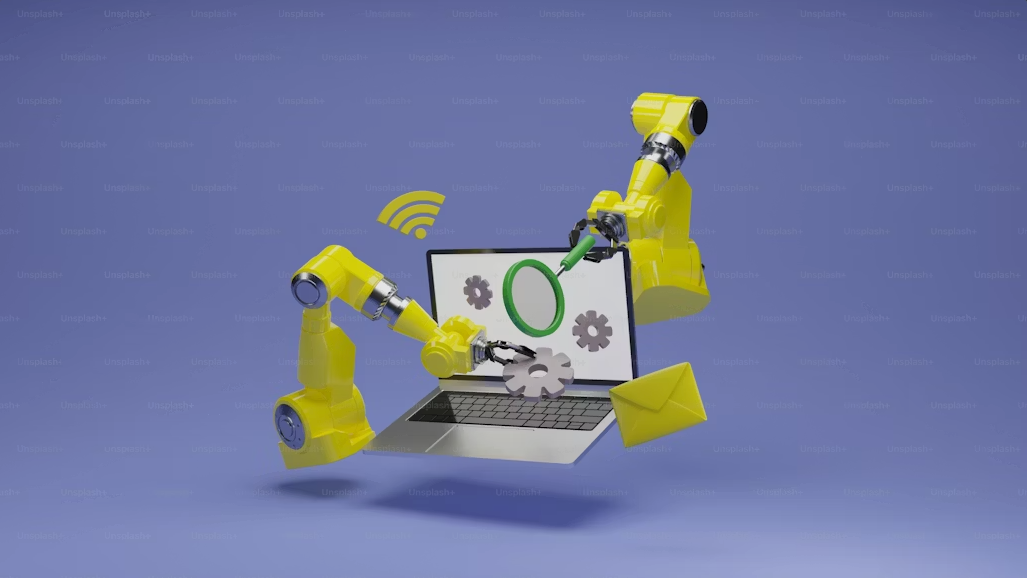
In the chronicles of Connectivity Economics, Automation is not the "Replacement of Labor," but the Refactoring of the Nodal Office and its Strata. Especially as we enter the reign of Algorithms, Models, and the Spirit of AI, the change occurs not at the margins of efficiency, but within the very Structural Locus of the Node itself.
I. Not the Abolition of Nodes, but the Migration of Function The common discourse perceives Automation as a devouring shadow: machines devouring men, tech slaying vocations, and efficiency strangling the breadwinner. But the structural eye beholds a different alchemy. Automation truly executes a singular work:
- It extracts the Repetitive Connectivity Tasks once borne by the hand of Man;
- It consigns them to the Machine to be finished with a swifter pulse and a purer precision;
- It thereby compels the Human Node to ascend to a New Stratum of Function. The Node does not vanish; it migrates.
II. From the "Artisan of Skill" to the "Regent of the System" Before the advent of the Machine, the worth of a Node was found in the mastery of a specific craft, the endurance of repetition, and the narrow precision of the local act. But as Automation intervenes:
- The Skill is refactored into Modules;
- The Execution is usurped by the Engine;
- The marginal worth of Repetitive Toil decays toward zero.
The sovereign function of the Node thus transmutes into the Operation and Stewardship of the System. The Node is no longer the "Provider of Skill," but the Architect of the Task's Horizon and the Guardian of its Flow.
III. Data Provision: The New Sacramental Office Automation, and specifically the Spirit of AI, does not rely upon dead code alone, but upon a relentless current of Input, Correction, and Witness. In this new architecture, a vital office of the Human Node is: The Provision of Context and Truth.
- Providing the soil of Training Data;
- Witnessing the Judgment Samples;
- Decreeing the Hierarchy of Values;
- Signaling the Breach and the Error.
The Node no longer merely "does"; it participates in the Construction of the Decisive Context and the calibration of the System's Moral Gravity.
IV. The Composite Node: The New Unit of Power As Automation is deeply grafted into the web, the Node is no longer a "Purely Human" thing. The true unit of connectivity becomes the Man-Automation Composite. In this holy or profane union:
- Man provides the Direction, Judgment, and Moral Constraint;
- Automation provides the Velocity, Magnitude, and Stability;
- Together, they form a Higher Order of Connectivity Unit.
The measure of a Node’s grace is no longer "How great is his solitary skill?" but "How potent is his covenant with the Machine?"
V. The Great Ascension: From First-Order to Systemic Node At the structural level, Automation compels a vital leap: from the First-Order Node to the Systemic Node.
- The Node is no longer tethered to a solitary chain of connection;
- It begins to influence a Multitude of Connectivity Paths;
- It participates in the harmony of diverse sub-systems.
The Node attains the capacity for Cross-System Comprehension and Structural Adjustment. Its worth is no longer found in the "Tally of Tasks Finished," but in its Contribution to the Efficacy of the Whole.
VI. The Pressure of Refinement: Not Destruction, but Elevation We must decree that Automation is not a "Hammer of Devastation" upon Man, but a Structural Pressure for Elevation. Only the Node that refuses the migration is exiled to the periphery. The Node that can:
- Forge a stable covenant with Automation;
- Comprehend the Hierarchies of the System;
- Create value at the interface of Soul and Machine; Will find its Bandwidth and its Shadow vastly magnified.
Summary of 6.2.2
- Automation refactors the Nodal Role, not the Nodal Existence.
- Man migrates from the "Skill Executor" to the Systemic Regent and Context Provider.
- The new unit of Connectivity is the Composite Node.
- Evaluative standards shift from solitary craft to Systemic Contribution.
This leads us to the next movement: When the Node begins to hold the office of Creation and Direction, why does the Creative Node receive the sovereign premium of the age?