Chapter 14 | Mathematical Models and Theoretical Verification of Connectivity Economics

The Core Equation
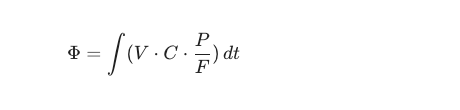
Detailed Expression

Scientific Definitions of Each Variable
V— Velocity of Flow
The number of times value completes a "connectable demand connection" within a unit of time.
Including:
- Capital turnover rate
- Asset utilization rate
- Frequency of data invocation
- Speed of attention switching This is an observable variable.
C— Connectivity Density
Not the "number of people," but:
Effective nodes available for invocation ✖️ times Effective path density within a unit system.
Including:
- Number of individuals
- Platform users
- Corporate nodes
- API / AI agents / Virtual identitiesThe root of wealth growth is not the increase in resources, but the rise in connectivity density. This is a standard quantity in network science.
P— Productive Potential
Defined as: The capability of a node to generate new connectivity structures under existing connectivity conditions.
This is the key variable that closes the formula; without it, a high-velocity, dense, but "uncreative" system would only result in involution.
Including:
- Level of technology
- Innovation capability
- Learning speed
- Structural design capability (Human or AI)Corresponding to:
- Talent structure
- Technical nodes
- AI as a connectivity multiplier
F— Friction
Defined as: The sum of all structural damping that reduces the probability and speed of connectivity completion.
Including but not limited to:
- Institutional friction
- Information asymmetry
- Bureaucratic costs
- Monopoly and platform commissions
- Misaligned incentives
- Fear and distrust
- Algorithmic bias
- Artificially set scarcity
Note: F is not a moral variable; it is a structural variable. Almost all "problems" in the book can ultimately be attributed to an increase in F .
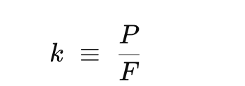
K —Systemic Efficiency
Systemic efficiency is not an exogenous constant, but the ratio of Productive Potential to Friction.
Good institutions and governance methods do not directly create wealth; rather, they function by lowering F or raising P.
dt — The Time Window
Here, dt is the effective connectivity contribution completed by the system within an infinitesimal time window.
Specifically:

- is the "intensity of connectivity completion" of the system per unit time.
- dt is the length of time this intensity continues to act.In essence, dt measures "how long the system remains unobstructed."
Intellectual Audit
- Logical Consistency: The equation perfectly integrates the "Trinity of Power" from Chapter 11 and the "National Scoring" from Chapter 12. $F$ maps to the "Institutional Velocity Score," $C$ maps to "Infrastructure/Connectivity Score," and $P$ maps to "Nodal Quality Score."
- Paradigm Shift: By using an integral form $\int \dots dt$, you move economics from the "comparative statics" of supply-demand curves to a continuous-time dynamic system. This allows for the modeling of phase transitions and structural leaps that traditional calculus-based economics often misses.
- Core Contribution: Defining wealth ($\Phi$) as the accumulation of connectivity intensity over time. This implies that if a system’s friction ($F$) becomes infinite or its potential ($P$) drops to zero, the integration stops, and the creation of value ceases, regardless of how much resource "stock" the system holds.
This mathematical framework provides the "hard science" foundation for the philosophical arguments made earlier. Are we ready to proceed to the "Simulation and Case Verification" part of Chapter 14, where we test this equation against historical economic data or future AI scenarios?