3.4|Defining Success: Is the Great Tree Truly More "Successful"?
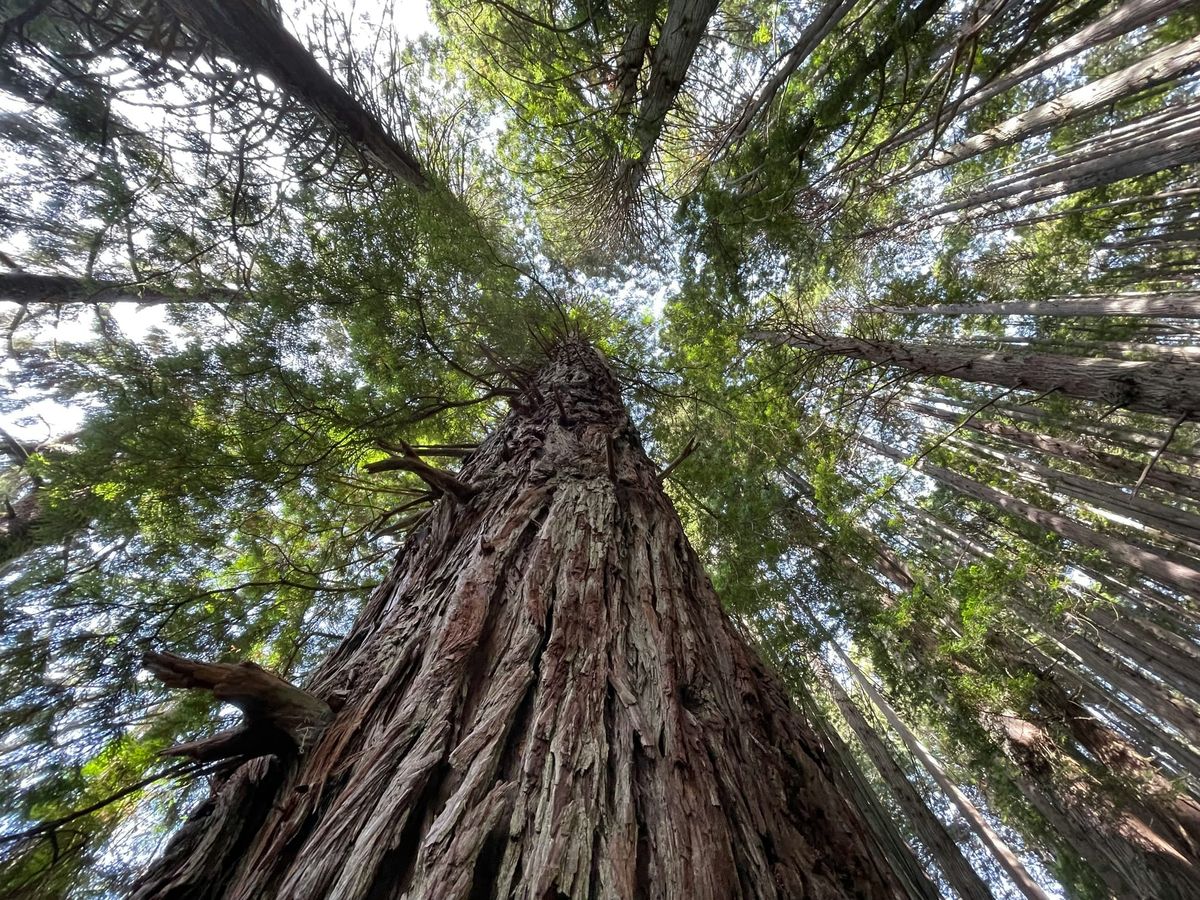
X. Defining Success: Is the Great Tree Truly More "Successful"?
This leads us to a deeper paradox: In a vast forest, is only the towering tree considered a "success"? Does the forest only permit the existence of giants, forbidding mushrooms and shrubs? If a forest consisted only of great trees—without shrubs, ground cover, moss, or fungi—what would happen to its ecology?
- The ground would lose its vitality due to a lack of vegetation;
- The animal habitats would become dangerously monotonous;
- The entire food chain would become fragile and unstable;
- Ultimately, even the survival of the great trees might be threatened.
In the eyes of Nature, the tree, the shrub, and the mushroom are all equally valid. Nature does not label them "noble" or "lowly." There are only "differences in species"—each according to its kind, each according to its nature.
- A tree growing tall does not make it "superior" to a shrub;
- An apple cannot compete with a banana for "seniority";
- A tiger is not inherently "nobler" than a rabbit.
It is only within the human value system that we impose a hierarchy: the one who earns the most, holds the most power, or commands the most followers is deemed the "most successful." Only humans believe that because a tree stands above a shrub, it is more "successful."
This is why I dedicated so much space in Chapter One to defining true success. True success is not everyone becoming a towering tree; it is everyone becoming themselves. The mushroom contentedly being a mushroom, the shrub happily being a shrub, and the tree being a tree. When every species finds joy in its own existence, the entire ecosystem flourishes.
XI. Can Humans "Grow Taller"? — The Promise of Divine Successology
However, we must acknowledge reality:
- Modern society has established a uniform definition of "good" and "bad."
- Almost everyone wants to be a tree; few are content to be a "shrub" forever.
- Many only begin to consider "being themselves" after they have tried being a tree and experienced its unique burdens.
The question then arises: Since we all want to "grow tall," do we have a chance? My answer is: Yes, you do.
This is the core purpose of Divine Successology:
- It is not to deny human desire;
- It is not a simple call to "accept your fate" and lie down;
- It is to provide a truly actionable path where everyone can achieve the state their heart truly desires within their predestination.
I am not offering a new batch of "motivational chicken soup." I am building a Success Engineering Science that truly works for everyone. It doesn't tell you: "If you work hard, you will become the tree others expect." Instead, it tells you that the core of success is the Seed—the predestined "destiny" deep within you.
But I must emphasize one critical difference: Humans are not plants or animals. A shrub seed can never become an oak seed. A mushroom spore can never become a pine. But a human can change their seed. Because humans do not rely solely on nature; humans can rely on Grace.
A person’s "seed"—their internal state—can be changed and renewed. We have the opportunity to:
- Transform from a "shrub-like" internal structure to an "oak-like" internal structure;
- Shift from a foundational setting of fear and scarcity to one of freedom, abundance, and stability.
And the most fascinating part is that once you experience this "Seed Renewal," you will likely find yourself profoundly happy being the "most authentic version of you." Perhaps that version still looks like a "shrub" to the world, but in the eyes of God, you are perfectly fulfilling your destiny.
XII. Returning to My Brother and Me: Why Are Our Lives So Different?
To move from abstract metaphors to reality, let’s look at a personal example: my brother and me. We are only two years apart, grew up eating and sleeping together, and have always been close. He was my biggest "fan" growing up: reading what I read, believing what I believed, and trying what I tried. Our upbringing and environment were identical.
By the logic of traditional successology, our "starting conditions" were the same. Yet, our life paths have been vastly different.
When I first achieved entrepreneurial success, I carried a heavy "Great Tree Mentality." I thought: "I am successful now. I must pull him up, save him, and make him successful too." This sounds much like Andrew Carnegie’s charge to Napoleon Hill. I believed success followed a formula, and if I replicated my mindset in him, I could replicate my results.
I worked tirelessly to "cultivate" him:
- Kept him by my side to teach him personally;
- Lectured him on various principles;
- Felt frustrated by his perceived lack of ambition;
- Even started a company for him, building it from 0 to 1 before handing him the reins.
By successology standards, this was a "perfect replication" attempt. The result? He never became "another me." At the time, I was frustrated and confused. It wasn't until later that I let go of this obsession with changing someone else's seed. I finally admitted: He is not another me. His seed is different.
Later life proved that when he walked his own path:
- He gained self-respect and strength;
- He became self-consistent;
- His sense of happiness far exceeded the state of constant anxiety he felt while trying to meet my expectations.
By pure material standards, he has not achieved what we typically call "success." He has no vast wealth or glittering titles. But by the standard of "becoming oneself," his life reached a state of peace and security far earlier than mine did.
This experience confirms the conclusion: Successology "works" for some because it helps those who were already "destined to succeed" realize that destiny faster. It has no power to change the inherent "type of seed" a person possesses.
XIII. The Question for the Next Chapter: What is the Essence of the Seed?
If the seed is the key, what is its essence? If we say the seed is the "internal state," we must ask:
- What are the operating rules of this internal state?
- What is the relationship between the human heart and human behavior?
- Why can a human "seed" be renewed through Grace while a plant's cannot?
To truly change our internal state, we must first understand how the heart influences reality and how belief shapes behavior and results. These questions form the core foundation of Divine Successology. This chapter merely set the framework for "Predestination" and the "Seed." In the next chapter, we will formally enter the structure of the human heart and behavior patterns to understand the ultimate meaning of destiny.