3.2 |Steve Jobs’s "Connecting the Dots"
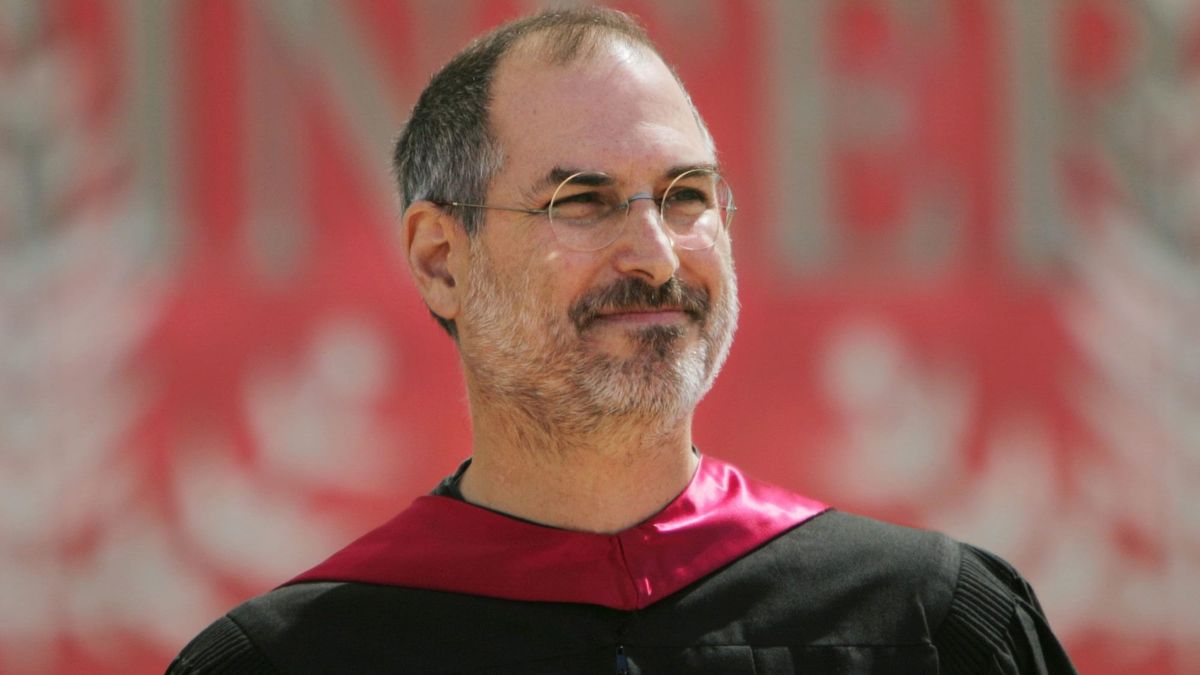
III. Jobs’s "Connecting the Dots": Seeing Destiny in Retrospect
In Steve Jobs's most famous commencement speech, he told three stories from his life. On the surface, these stories were about "setbacks":
- Being abandoned by his biological mother and adopted as a child;
- Dropping out of college to wander through Zen meditation, calligraphy, and miscellaneous interests;
- Being "fired" from Apple, the very company he founded.
Yet, standing on the Stanford stage near the end of his life, looking back at these stories, he said: You can't connect the dots looking forward; you can only connect them looking backward. Jobs used the metaphor of "Connecting the Dots." We can understand it this way: life is a picture where all the dots were drawn from the very beginning, even if we couldn't understand them at the time. When you are struggling at a single point in the drawing, you have no idea what the final line will look like. You only know that in this moment, it hurts and causes conflict. Only years later, when looking back, do you discover that the blows you thought would kill you were actually the indispensable strokes of the entire masterpiece.
In other words, in a certain sense: Destiny is a "finalized script" from the beginning; we simply cannot read it in real-time.
The irony is that none of us know our own destiny. We only have the chance to see the trajectory clearly when we look back at the end, just as Jobs did. While walking our path, we don't know what our "predestination" is, nor can we see where the finish line lies. This is why people everywhere are so obsessed with prediction, divination, and fortune-telling—because if everyone knew their life’s direction in advance, most of the anxiety, struggle, comparison, and fear would vanish. We would find it easier to "accept our fate" and surrender, just as the tow truck driver said: "I’ve accepted my fate."
IV. Why Do Some Succeed with Successology While Others Do Not?
Now, we can return to the question posed earlier: Why is it that among the many who study successology, most do not succeed, yet a small portion truly does?
In this chapter, my answer is direct: Because those who succeeded after studying successology were predestined to succeed in the first place. Whether they studied it or not, they likely would have succeeded eventually. Successology's role in their lives was merely to:
- Provide certain inspirations;
- Accelerate the speed at which they realized their destiny;
- Help them take fewer detours during moments of confusion.
But it was not the decisive cause. The true core is this: they were destined for success, and thus they were born with the critical qualities success requires.
V. The Confession of a Top-Tier Teacher: Education is Support, the Seed is Key
This reminds me of a conversation I had with a homeroom teacher of an elite class at one of China’s top middle schools. His class was essentially a "camp for geniuses":
- Students who entered university-level youth programs in their early teens;
- More than half the class heading to top global universities.
I asked him a question I had long kept in my heart: "Can you answer me honestly: Do these children perform so brilliantly because you teach them well, or because they were born as 'natural sprouts' for learning?"
He thought for a moment and confessed: "Actually, they learn well on their own. For the most exceptional children, there is really 'nothing we can teach.' What we can do is support them—offer more encouragement, provide comfort, and guide them."
In other words:
- Education is the catalyst.
- Talent is the underlying operating system.
This is perfectly consistent with our conclusion regarding successology. Those theories and techniques are excellent "motivational tools," "psychological comforts," and "action reminders."
- For those destined to succeed, these tools act as "accelerators," helping them unleash their inherent potential faster.
- For the majority whose path is not destined for that specific type of success, the effects are very limited, often leading to even greater frustration.
It is like this: even the best teacher cannot use "methods" to get a child into a world-class university if that child possesses no inherent passion, interest, or talent for learning. Even the most divine training system can hardly turn someone with average aptitude and no love for sports into an Olympic champion.
The true logic of top teams worldwide—whether in sports, mathematics, or scientific research—is always: "Selecting the right seed is far more important than how hard you teach."
Of course, if you have the opportunity to join a truly exceptional team, even if you are not a genius, you will be "pulled up" by the overall level, eventually surpassing your original self. We will explain why this is so in later chapters; this question is a fundamental theory of Divine Successology.
But for now, remember this one sentence: True success, in its essence, is predestined.