13.2 |The Counterpoint: The Story of Huineng — Essence Over Form
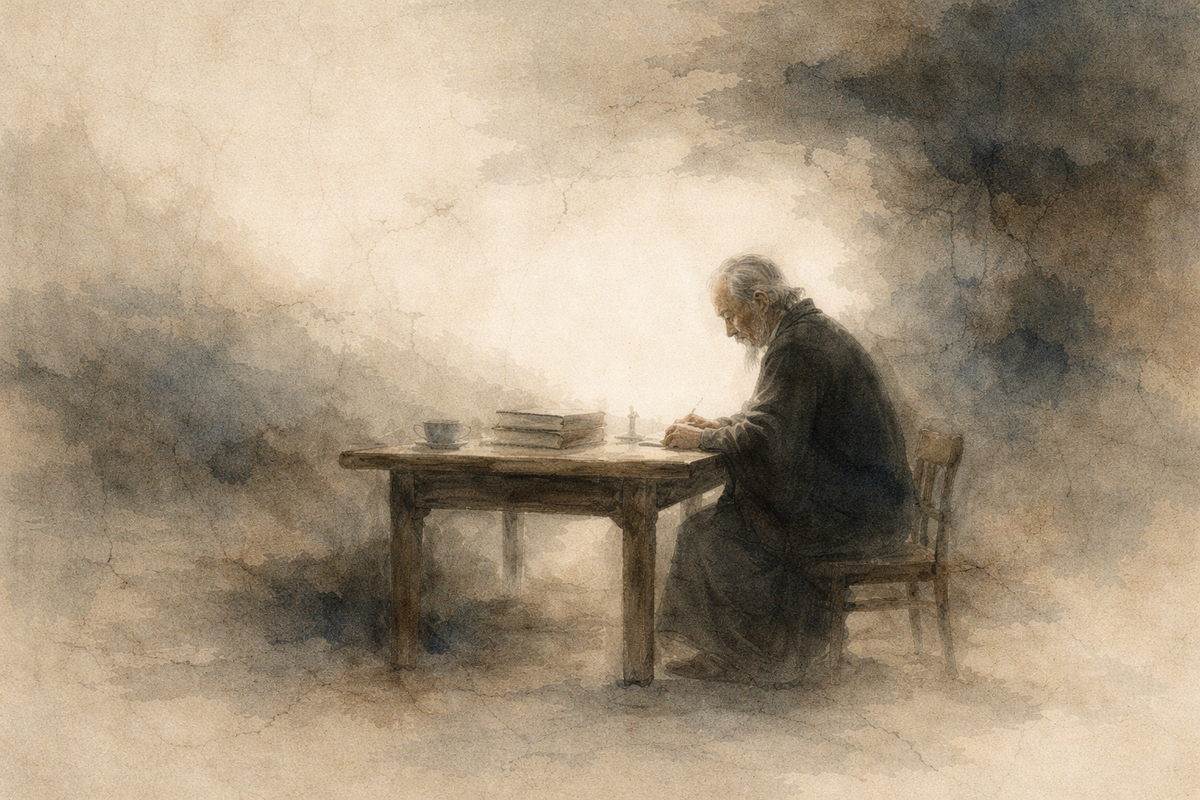
The Counterpoint: The Story of Huineng — Essence Over Form
I do not intend to discuss Zen Buddhism as a doctrine. Rather, I wish to illustrate a universal truth: in our relationship with the Divine, the substance of the heart far outweighs the format of the ritual.
The story of Huineng, the Sixth Patriarch of Zen, is instructive. Originally a humble woodcutter, illiterate and destitute, he had no formal training in philosophy. One day, while selling wood, he overheard someone reciting the Diamond Sutra. Upon hearing the phrase, "Depending upon nothing, you must find your own mind," he was struck with a profound, visceral resonance—much like the "lightning bolt" I experienced upon hearing certain scriptures.
He trekked hundreds of miles from Guangdong to Hubei to seek the Great Master. When questioned about his humble origins, Huineng replied with a truth that pierced through social hierarchy: "People may be from the North or South, but the Buddha-nature knows no geography."
Though he spent years performing menial labor—sweeping floors and hauling water—without a single formal lesson, it was Huineng who ultimately grasped the essence of enlightenment. When the senior disciple wrote a poem about the necessity of constant "polishing" and "cleaning" the mind (the Form), Huineng countered with a verse declaring that the original mind is inherently clear and beyond the need for external polishing (the Essence). He became the patriarch because he "pointed directly to the human heart," bypassing the rigid structures of the text.
I recount this not to preach Zen, but to emphasize: Form does not guarantee spiritual reality. The alignment of the heart is what determines the actual potency of prayer.
3. The Heart at the Center: Communication Over Template
My conclusion is simple: Prayer is the act of communicating with Jesus from the depths of the heart. It requires no fixed template, no specialized vocabulary, and no mandatory ritual. God seeks your heart, not your formatting.
Prayer is Being with Jesus. It is the process of bringing our thoughts, our internal states, and the grit of our daily problems before Him. It is a genuine connection. Prayer is not always about "asking for things"; it can be:
- Simple communion;
- Presenting questions and doubts;
- Maintaining a sense of His presence;
- Expressing love or gratitude.
However, if your objective is Success—if you have a definitive request—then you must ask. You must deliver your petition with absolute clarity and ensure your heart is tethered to Him during the exchange.
For me, the key was to strip away the anxiety of "remembering the prayer vocabulary." If my cognitive resources are spent on memorizing a script, I have no energy left for actual communication. Thus, I "engineered" a method that bypasses the friction of ritual: