01 | The Garden of Emergence: Deconstructing the Myth of Managed Education
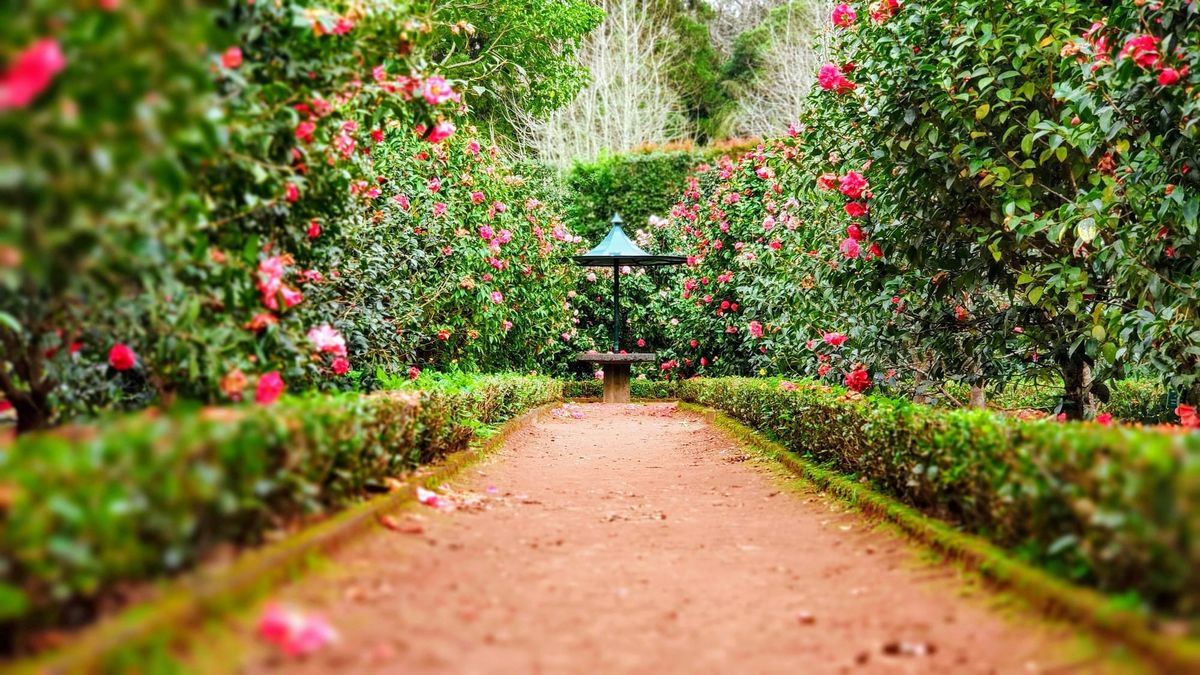
(Education Principle Series - Vol. 01)
In the traditional paradigms of the past century, education has been treated as a branch of industrial engineering. We have viewed the child as a "blank slate" to be inscribed, or a raw material to be processed through a linear assembly line of curriculum, management, and control. We plan their trajectories with the precision of a central bank and manage their growth with the anxiety of a corporate executive.
Yet, as we transition into a new civilizational architecture, we must confront a stark reality: Managed education is the enemy of life. True education is not a project of "construction," but a phenomenon of "emergence."
- The Arboreal Protocol: From Management to Observation
The first pillar of this new educational philosophy is the transition from the Architect to the Gardener.
When you plant a tree, you do not "manage" its growth. You do not command the branches to reach a specific angle or dictate the timing of the blossoms. You provide the soil, the water, and the boundary; then, you step back. You observe.
To "abandon management" is not to abdicate responsibility, but to exercise a higher form of restraint. It is to recognize that each child possesses a unique "biological variety"—a structural essence that we did not create and have no right to alter. Our task is not to change the variety, but to facilitate the environment in which that variety can reach its maximum expression. We move from a logic of Control to a logic of Nurturance.
- Education as the Altar of Self-Refinement
We must decouple the child’s existence from our own egos. For too long, the child has been viewed as a "self-derivative"—a second chance for the parent to correct their own failures or a vessel to carry the parent’s unfulfilled ambitions.
In this new framework, we treat marriage and parenthood as a path of cultivation (Xiu Xing) rather than an extension of the self. The child is not a project to be completed, but a mirror reflecting our own internal conflicts. Every clash of wills, every moment of frustration, is not a signal to exert more control over the child, but a prompt for periodic awareness within ourselves. When conflict arises, we do not suppress the child; we observe our own reaction, shift our perspective, and transform the moment of tension into a moment of awakening.
- The Power of Informal Presence
One of the most profound errors of formal education is the belief that "learning" only happens when a teacher is speaking and a student is listening. Cognitive science and the study of human systems reveal a different truth: humans are masters of inattentive learning.
The harder you attempt to force a formal lesson, the more the child’s cognitive defenses rise. A child learns more from the "side-glance" than the "stare." They absorb the atmosphere of the home, the integrity of the parents’ actions, and the casual conversations overheard in the hallway.
A formal lecture is often less impactful than the presence of a parent who is themselves a seeker of truth. If you wish a child to value knowledge, do not lecture them on its importance; let them see you in a state of wonder, exploring a problem you do not yet understand.
- Embracing the Miracle of Uncertainty
To educate is to abandon the illusion of certainty. In an era where AI and algorithmic prediction dominate, the most valuable human trait is the ability to navigate the unknown.
By lowering our position—by admitting "I don't know" and becoming a partner in exploration rather than a source of absolute answers—we demonstrate the most critical skill of the new age: The Art of Constant Inquiry. We do not seek to produce a predictable output. We seek to foster a life that is capable of generating its own miracles. We set the boundaries—not through arbitrary power, but through shared rules that protect the sanctity of the space—and then we wait, with the patience of a gardener, for the emergence of a being that is entirely, beautifully, and structurally different from ourselves.
In the next chapter, we will explore the "Socratic Inversion": How to lead by following and how to teach by listening.