3.3 |The Misunderstanding of Attribution
VI. The Misunderstanding of Attribution: Mistaking the "Seed" for the "Method"
Looking back at the examples of famous entrepreneurs in Think and Grow Rich, including the young men selected by Mr. Carnegie according to his principles, the essence remains the same: they eventually became legendary figures not merely because they learned certain "principles of success," but because they possessed the "seeds of success" from the very beginning.
Because we cannot see the "seed" and are unaware of the "original script of destiny," we naturally search for "visible causes" to explain success. Consequently, we tend to attribute our achievements to:
- The knowledge we acquired;
- The personality traits that came naturally to us;
- A specific moment of inspiration or motivation.
This is simply another manifestation of the Attribution Error mentioned in the previous chapter. Most people fall into a common cognitive trap: they subconsciously assume that everyone else in the world is "just like them." This error is particularly common among those who possess innate qualities for success. They think: "These qualities are achievable for everyone, aren't they? If I can do it, why can't others?"
A person with an extraordinary internal structure often feels that they are quite ordinary. They struggle to understand why others cannot replicate the experiences they have summarized. It is like a man born with the strength to lift a massive bronze tripod who thinks physical training is simply: "Lifting a 500-pound barbell every day; it’s nothing, just stick to it." If others fail, he blames it on: "You are just lazy; you lack willpower." He rarely considers another possibility: "Is it possible that they truly cannot do it?" From his perspective, every explanation for "not being able to do it" is dismissed as an "excuse."
VII. The Core Metaphor of Destiny: Trees and Mushrooms in the Forest
To help everyone visualize the logic of "Predestination," I want to use a metaphor. Strictly speaking, this metaphor is not perfectly adequate because humans are different from all other things in the world—humans are born with grace and have the opportunity to transcend "natural destiny." We will expand on this in later chapters. But for now, let us temporarily treat humans as a "species" in the forest for the sake of understanding.
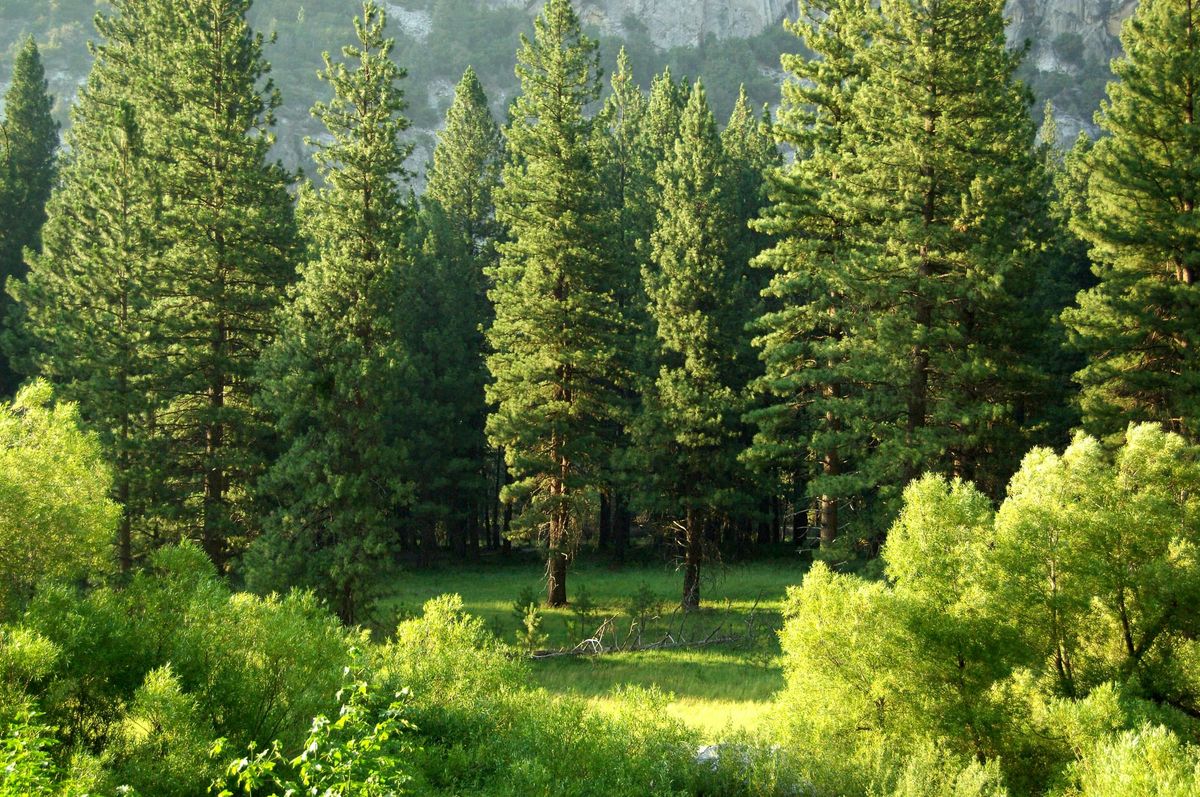
Imagine a forest. In this forest, there are:
- Towering trees,
- Various shrubs,
- And mushrooms growing on decaying trunks.
The towering trees, the shrubs, the saplings, and the mushrooms all exist in roughly the same environment: the same land, the same sunlight, similar rainfall, and soil. So, what determines what they eventually become? Is it the environment? No. It is the seed.
(Technically, mushrooms come from spores, but here we use "seed" in a broad sense—referring to the essential internal structure of any organism.)
When the seeds are first scattered in the soil:
- The towering tree does not yet know how high it will grow;
- The small tree does not know at what height it will stop;
- The shrub seed never imagines it will one day be labeled a "shrub";
- The mushroom never expects to grow beside damp, rotting wood.
If we assume these seeds had consciousness and could communicate, a fascinating scene would emerge years later: the towering tree reaches the clouds, while many small trees in the same forest remain short; shrubs carpet the ground, and mushrooms stay in the shade. If the great tree looked back at the small trees and shrubs, it might say: "You are just not working hard enough; you lack self-discipline. We started in the same forest; why can I grow so high while you cannot?"
From the great tree's perspective, this sounds "reasonable." After all, it indeed endured wind and rain and survived natural disasters; it had its own struggles and persistence. But the problem is: the reason the great tree became a great tree, the shrub became a shrub, and the mushroom became a mushroom is that they were different seeds from the very start.
Because the seeds were different, they exhibited different "habits":
- Some "prefer the shade," like mushrooms;
- Some grow halfway and then begin to spread branches horizontally, like many shrubs;
- Some continue to strive upward, pushing through harsh environments to reach the light.
But we must ask in reverse: Is it "because they prefer shade and horizontal growth that they become short," or is it "because they are essentially those kinds of seeds that they naturally prefer shade and horizontal expansion"?
In reality, we often reverse the cause and effect. What determines what they grow into is not the environment, nor later habits, but the seed itself. One could even say: "Habit is the fruit of the seed, not the cause of height and form."
A great tree was a great tree from the beginning, even if it didn't know it, even if its seed looked more inconspicuous than others. The seeds of mushrooms and shrubs were determined from the start. The seed is the decisive factor.
VIII. The Role of Environment: Important, but Not Decisive
Does the environment matter? Of course. Although many seeds are scattered in the same forest:
- Light, soil, humidity, and temperature vary across different areas;
- Some areas are suitable for germination, while others make growth difficult;
- Some environments allow an ordinary tree seed to reach its "maximum potential," while others might cause a great seed to wither prematurely.
Thus, we can say: Environment is important, but it is not the decisive cause. What does the environment affect?
- It determines the speed of growth (fast or slow);
- It determines whether one "fully blossoms" or becomes an "underdeveloped version";
- It determines whether one grows healthily or is destroyed by pests;
- It determines whether species can freely display their characteristics or if they suppress one another.
In other words:
- In a forest with insufficient light and poor soil, even a great tree seed will struggle to reach the sky;
- In a favorable environment with perfect weather, many ordinary small tree seeds can grow comfortably and fully.
But regardless: Environment can only determine "what state of a tree/shrub/mushroom" one becomes; it cannot turn a mushroom into an oak or a shrub into a redwood.
To summarize:
- Seed is the internal cause; Environment is the external cause.
- Seed is the decisive factor; Environment is the influential, supporting factor.
IX. "Successful Habits" Are Merely the Natural Manifestation of the Seed
Now, let us look back at "successful habits." From the perspective of Predestination, so-called "successful habits" are actually: The natural outward manifestation of the seed's nature.
A great tree’s nature is to grow upward, so it naturally displays a form of "striving upward." A mushroom’s nature is to prefer shade, so it naturally grows in dark, damp corners. These so-called "habits" or "characters" are essentially the outward display of the seed's essence; they are the "result," not the "cause."
However, if the great tree mistakes the nature of its own seed for a "method that can be replicated by all plants," the problem arises. The great tree feels it has "succeeded" and begins to summarize its experience:
- Always grow upward;
- Do not grow random side branches;
- Persevere even against the wind and rain;
- How to seize sunlight in the early stages...
Then, it tries to teach these experiences to the shrubs. The shrubs are eager to learn, perhaps working even harder and more diligently than the tree. But no matter how hard a shrub tries, it can never become a great tree.
The great tree grows tall with ease, and it might even develop a condescending judgment: "See, I am simply more disciplined and have more stamina. If you learn my methods, you can grow tall like me."
Then, the slogan appears: "Everyone can grow tall."
It sounds inspiring, but from the perspective of Predestination and seeds—this is a classic Attribution Error.